
Quiet luxury is not a colour palette or a price bracket. It is a way of editing a room so that the materials, proportions and light do the talking, and the branding stays out of the conversation. In 2026 the look is still everywhere, but the most convincing versions have moved past greige hotel rooms and into homes that feel personal, lived in and quietly expensive.
That distinction matters. The aesthetic is easy to imitate badly: a beige sofa, a beige wall, a beige rug, and a room that feels like a show flat nobody has ever cooked in. The real thing is warmer, more textured and more specific to the people who live there.
Material first, colour second
Understated interiors get their richness from texture. Linen that creases, wool that holds its shape, solid oak with visible grain, stone with a little movement, leather that darkens with use. These surfaces change in different light and reward being touched. A room built from five interesting materials does not need five colours to feel full.
When you are choosing between two pieces at a similar price, ask which one will look better in five years. A plain linen shade will age gracefully; a shiny synthetic one will not. This is the least glamorous and most reliable route to a room that reads as expensive.
Be careful with the word "neutral". A room of pale grey, white and chrome is not quiet luxury; it is a showroom. Quiet luxury usually includes at least one deep or earthy tone — cognac leather, smoked oak, olive linen, aged brass — to give the eye somewhere to land.
Proportion is the hidden luxury
Nothing makes a room feel cheaper than furniture that is the wrong size. A tiny rug floating in the middle of a large floor, a sofa that leaves a sliver of wall, a lamp that is too short for the table it sits on. Quiet luxury depends on things fitting: the sofa filling its wall, the rug extending under the front legs of the seating, the artwork scaled to the surface below it.
As a starting point, a sofa should occupy roughly two-thirds to three-quarters of the wall it sits against. A coffee table should be about half to two-thirds the length of the sofa, and leave 40–45 centimetres of walking space between the sofa and the table. Artwork should be roughly two-thirds the width of the furniture beneath it, or larger if it hangs alone on a wall.
Before buying, tape the dimensions out on the floor. It takes ten minutes and prevents the most common regret in home decorating.
Leave the room some silence
Quiet luxury is as much about absence as presence. One good chair is stronger than three mediocre ones. A single large artwork beats a gallery wall of small prints when the room is already busy. Empty wall space is not unfinished — it is composition.
The practical test: stand in the doorway. If your eye has nowhere to rest, remove something. If it lands on one object and then travels comfortably around the room, the balance is close. A room can hold a lot of objects and still feel calm, provided they are grouped and there are clear gaps between the groups.
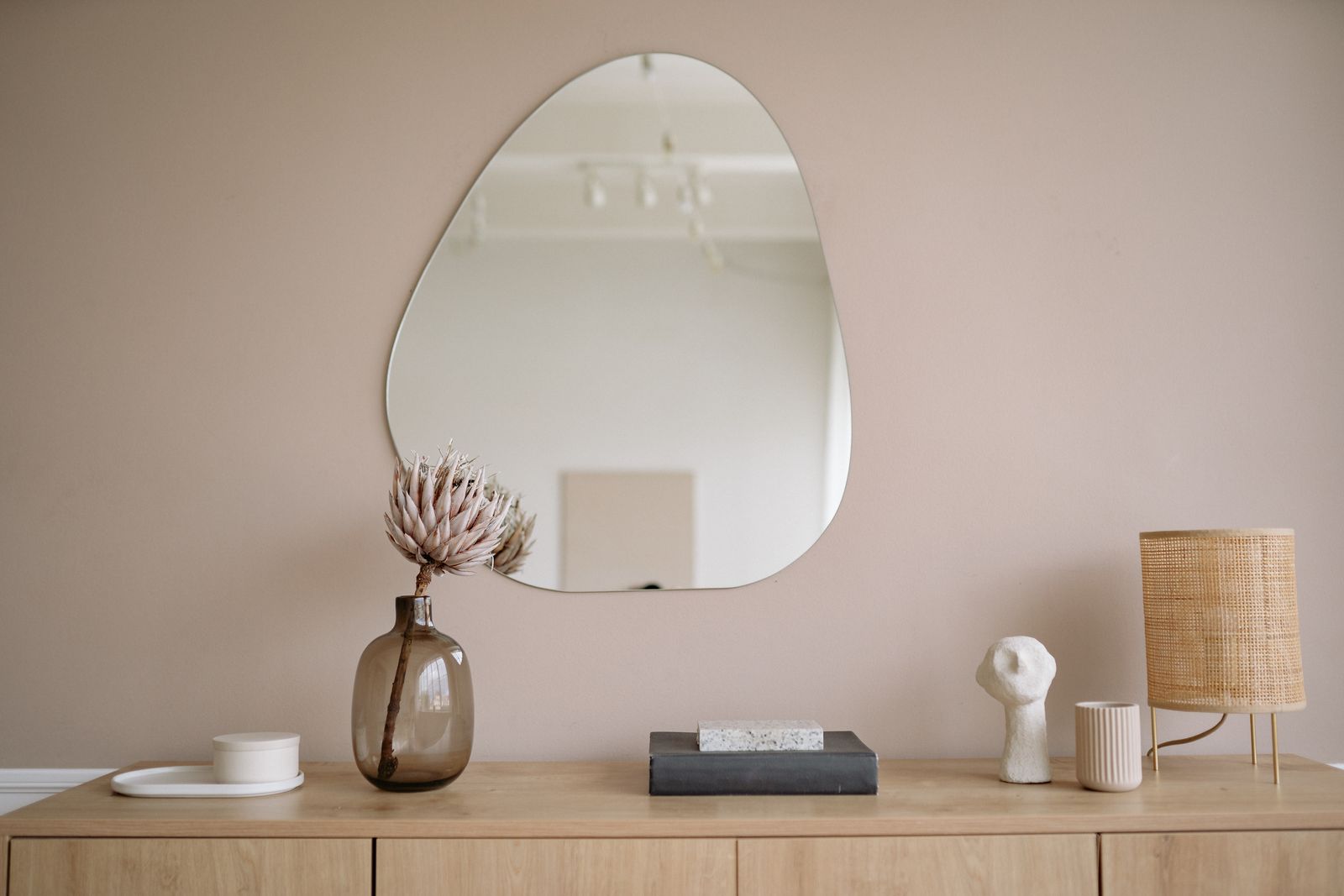
Photo: Yan Krukau / Pexels
Layer light instead of increasing it
Expensive rooms are rarely lit by a single ceiling fixture. They have pools of light at different heights: a table lamp, a floor lamp, a picture light, a candle. Warm bulbs — around 2700K — flatter skin, wood and fabric in a way that cool white light never will. Dimmers are cheap and transformative.
Aim for at least three light sources in a living room, all on separate switches or smart plugs. That lets you change the mood without moving a single piece of furniture. If the ceiling light is the only option, put it on a dimmer and use a warm bulb; even that small change removes the flat, office-like quality that undermines an otherwise calm room.
Buy fewer, better things — slowly
The quiet luxury idea collapses if it becomes another reason to buy a whole new room in one weekend. The homes that carry it best are assembled over years. A good sofa, then a rug that works with it, then a lamp found on a trip, then a chair inherited from a relative. The mix is what stops it looking like a catalogue page.
If you are starting from scratch, spend on the pieces you touch every day — sofa, bed, dining table, rug — and economise on the things you look at but rarely use. That hierarchy will do more for the feel of a home than any single trend colour.
It also helps to keep a running list of what the room actually needs rather than what it could theoretically hold. A list with three items on it is easier to resist than a showroom full of possibilities.
Where to spend and where to save
Quiet luxury is not a licence to spend everywhere. The hierarchy is fairly consistent: spend on the sofa, the mattress, the dining table and the rug, because those are the pieces you touch every day and the ones that are expensive to replace. Save on side tables, shelves, lamps and decorative objects, where a good shape matters more than a famous name.
Fabric is another place where money shows. A cheap wool blend will pill and sag; a tightly woven wool or linen will hold its shape for years. If the budget is tight, buy the best fabric you can in a simple shape rather than a complicated shape in a cheap fabric.
Finally, resist the urge to replace everything at once. A room assembled in a weekend looks like a room assembled in a weekend. Buying one good piece at a time, and living with the gaps, is what produces the settled quality that the style is named after.
Personality is the final layer
Books, records, a stack of magazines, a bowl brought back from a trip, a child's drawing in a decent frame. Understated does not mean anonymous. The most convincing quiet-luxury interiors have one or two things that could only belong to the person living there. Without them, the room is just well-behaved.
Display the things you use, not the things you bought to fill a shelf. A well-used wooden board, a favourite mug, a stack of books with broken spines — these read as a life, not a styling exercise. The goal is not to look rich. It is to look settled, as if the room has been quietly improving for years and will keep improving.