
A sofa is the most-used piece of furniture in most homes and the easiest one to buy badly. It is usually bought in a hurry, judged by colour, and expected to survive a decade of dinners, naps, spills and moving house. The difference between a sofa that lasts and one that sags is rarely visible from across a showroom.
These are the things worth checking before you pay, in roughly the order they affect how long the sofa will last.
Measure the room and the door
Start with two sets of measurements: the space the sofa will occupy, and the narrowest route into the room. A sofa that fits the wall but not the stairwell is a very expensive mistake. Measure the door width, the hallway, and any tight turn. If the legs unscrew, that helps; if not, check whether the frame can be tilted through.
As a guide, leave at least 45 centimetres of walking space around the main seating. In a small room, a two-seater that fits properly will feel better than a three-seater jammed against the radiator. Also account for reclining models: a recliner needs 15–20 centimetres of clearance behind it, and a wall-hugging mechanism needs less but still some.
Remember that the sofa has to arrive before it can be admired. Check the lift dimensions and the turning circle at the top of the stairs, not just the front door.
Check the frame
The frame determines whether the sofa stays square. Kiln-dried hardwood — beech, oak, ash — is the benchmark. Plywood can be acceptable in cheaper sofas if it is thick and well joined. Particleboard and MDF are a warning sign in a piece meant to last. Ask what the frame is made of, and if the answer is vague, assume the worst.
Look for corner blocks, dowels, or screws rather than staples alone. A good test is to lift one front corner of the sofa a few centimetres: if the other front corner lifts with it and the frame stays rigid, the construction is sound. If the sofa twists, walk away.
Understand the suspension
Under the seat cushions, the suspension takes the daily impact. Sinuous springs — the zigzag steel wires used in most mid-range sofas — are perfectly serviceable when they are properly gauged and anchored. Pocket springs, individually wrapped and sewn into a unit, distribute weight more evenly and are usually found in better furniture. Webbing is light and cheap; it suits occasional chairs more than a family sofa.
Ask whether the suspension is covered by the warranty. A frame that is guaranteed for fifteen years but a suspension guaranteed for two tells you where the maker expects failure.
Understand the filling
Seat cushions are where sofas fail first. Foam is the most common filling; high-resilience foam holds up better than cheap foam, and a density figure above 30 kg/m³ is a reasonable sign. Feather-and-down cushions feel wonderful but need daily plumping and will flatten over time. A foam core wrapped in down or fibre is a practical compromise.
Ask whether the cushion covers are removable and washable. If they are not, a single spilled coffee defines the sofa's future. Removable covers also let you replace the fabric after a few years without replacing the frame.
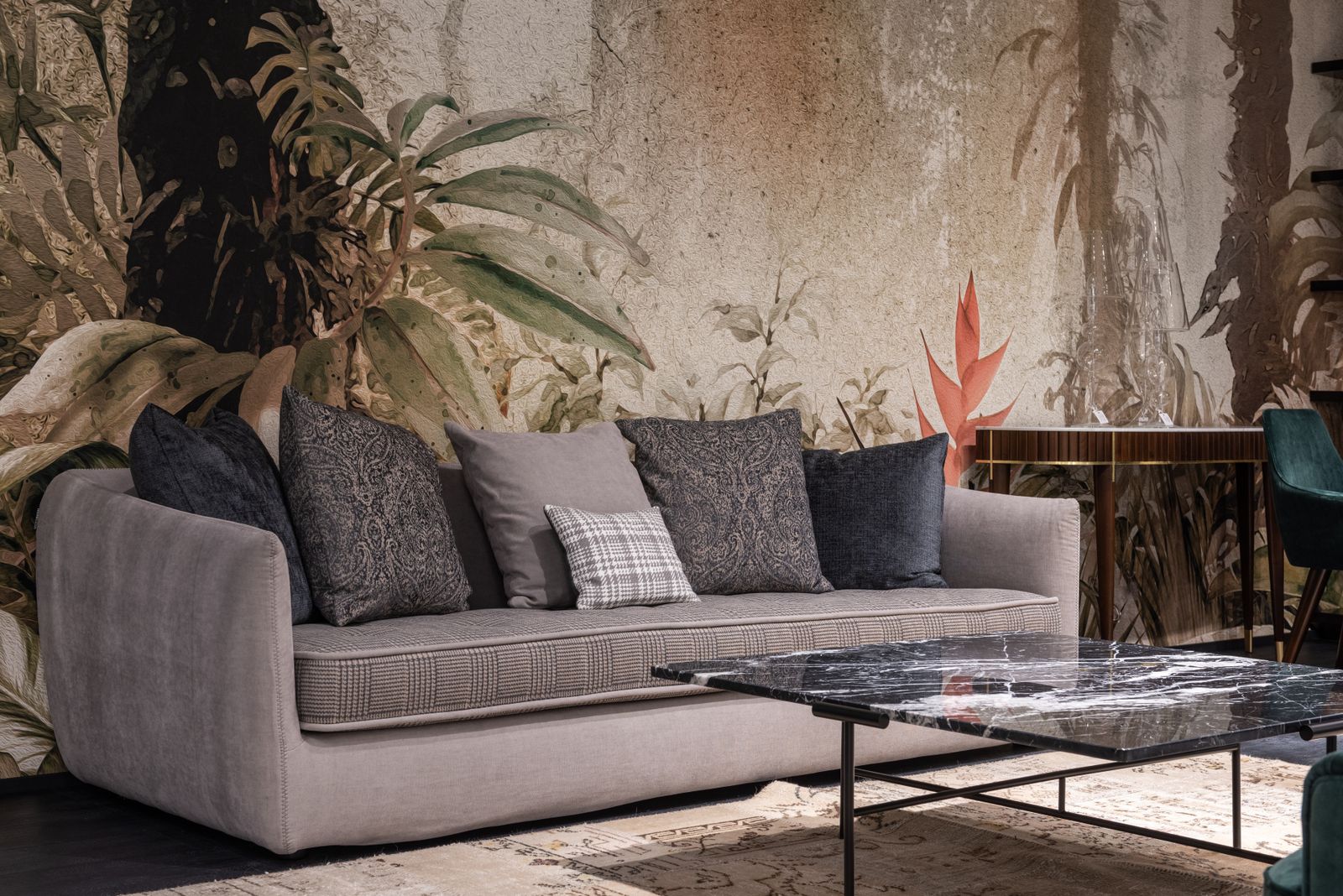
Photo: Max Vakhtbovych / Pexels
Choose fabric for your actual life
There is no universally best upholstery fabric — only the right one for the household. Tight-weave performance fabrics and microfibre resist stains and are good with children and pets. Cotton and linen look beautiful but crease and stain more readily. Velvet is durable but shows marks and needs care. Leather is easy to wipe but can be cold and scratched.
One useful number is rub count, which measures abrasion resistance. Roughly 15,000 rubs is light domestic use, 25,000 is general domestic, and 30,000+ is suitable for heavy use or pets. Ask for the figure rather than relying on the label "hard-wearing".
Ask for a sample and take it home. Look at it in your own light, next to your floor and walls, and rub it between your fingers. A fabric that feels thin in the showroom will feel thinner after five years. If you have a cat, tight weaves and leather are safer than loose bouclé or linen, which invite claws.
Decide on leather carefully
Leather is not one material. Aniline leather is the most natural and the most vulnerable to stains; semi-aniline is treated for some protection; pigmented leather is the most durable and the easiest to clean but feels less supple. Bonded leather — leather fibres glued to a backing — is much cheaper and much less durable; it tends to peel rather than patina.
If you want leather, check the grade and the thickness, and accept that it will mark. A leather sofa that shows a little wear looks better than one covered in protective throws because you are afraid to use it.
Sit properly — for at least ten minutes
Seat depth and height matter more than style. A deep sofa is comfortable for lounging but hard to get out of for anyone with knee problems. A shallow sofa looks neat but is uncomfortable for tall people. Seat height around 40–45 centimetres suits most adults; depth around 55–60 centimetres is a good middle ground.
Sit in the corner, not the middle. That is where the frame and filling get tested. Lean back, put your feet up, and imagine watching a two-hour film. If you are already shifting after five minutes, the sofa is wrong. If you are tall, check that the back supports your shoulders, not just your lower back.
Plan for care and delivery
Ask what the maker recommends for cleaning before you buy. Some performance fabrics can be wiped with water; others need a solvent cleaner, and using the wrong product can set a stain permanently. Keep the care label and a note of the fabric name, because you will not remember it in three years.
Check the delivery terms as carefully as the sofa. Does the price include room-of-choice delivery, or only kerbside? Will the delivery team remove the packaging? Is there a restocking fee if the sofa does not fit? A cheap sofa with an expensive return policy is not cheap.
Finally, vacuum the sofa weekly and rotate the cushions monthly. Most of the wear on a sofa is uneven, caused by sitting in the same spot. Rotating cushions and occasionally swapping seat positions spreads the load and keeps the filling from compacting in one place.
Think about the long term
A good sofa can be reupholstered; a cheap one usually cannot justify the cost. Removable covers, replaceable cushions and a frame with a long warranty are all signs that the maker expects the piece to last. Ask about the warranty and what it actually covers — frame only, or frame and suspension?
Finally, choose a neutral shape you can live with. Trends in silhouette move faster than the sofa will. A clean-lined sofa in a fabric you love will still look right when the current colour of the year has gone. Spend the money on the parts you cannot change later: frame, suspension and filling. Cushions and covers can be replaced.