
A rug is the fastest way to make a room feel finished — and the fastest way to make it feel wrong. Most rug problems are not about colour or pattern. They are about size and placement. Buy too small and the room looks like it is wearing a placemat. Float it in the middle of the floor and the furniture looks stranded.
The good news is that rugs are one of the few purchases where the rules are genuinely measurable. Once you know the dimensions of your furniture and the traffic paths through the room, the right size becomes obvious.
The living room rule
In a living room, the rug should be large enough that at least the front legs of every seating piece sit on it. Ideally, all four legs of the sofa and chairs are on the rug, with a border of bare floor around the edges. This ties the furniture together into one zone instead of leaving each piece on its own island.
For a typical three-seat sofa plus two chairs, that usually means a 200 × 300 centimetre rug or larger. A 160 × 230 centimetre rug works in a smaller room with a two-seater. A 120 × 170 centimetre rug is a bedside rug, not a living room rug.
If the room is long and narrow, consider two smaller rugs to define two seating areas rather than one enormous rug that swallows the floor. If the sofa is against a wall and the room is small, a runner behind the sofa is not a substitute for a proper rug under the seating.
Dining room: measure the chairs, not the table
The rug must extend far enough that a chair pulled out for sitting still has its back legs on the rug. Add at least 60 centimetres to every side of the table. For a six-seat table, that often means 250 × 350 centimetres. If the room cannot take that size, consider no rug at all — a too-small dining rug is worse than bare floor.
Also check the chair legs against the pile. Thin legs on a thick pile will wobble; a flat-weave or low-pile rug is more stable. In a dining room, a patterned or mid-tone rug hides crumbs and wine spills better than a pale solid colour.
Bedroom: go wide
A bedroom rug should extend at least 50–60 centimetres beyond each side of the bed so your feet land on something warm when you get up. Either place a large rug under the lower two-thirds of the bed, or use two runners on either side. A small rug at the foot of the bed is decorative, not functional.
If you have a king bed, measure carefully: a rug that looks generous in a shop may only extend 30 centimetres on each side. For a visual anchor, a rug placed under the bed should extend beyond the foot as well, usually by 60–90 centimetres.
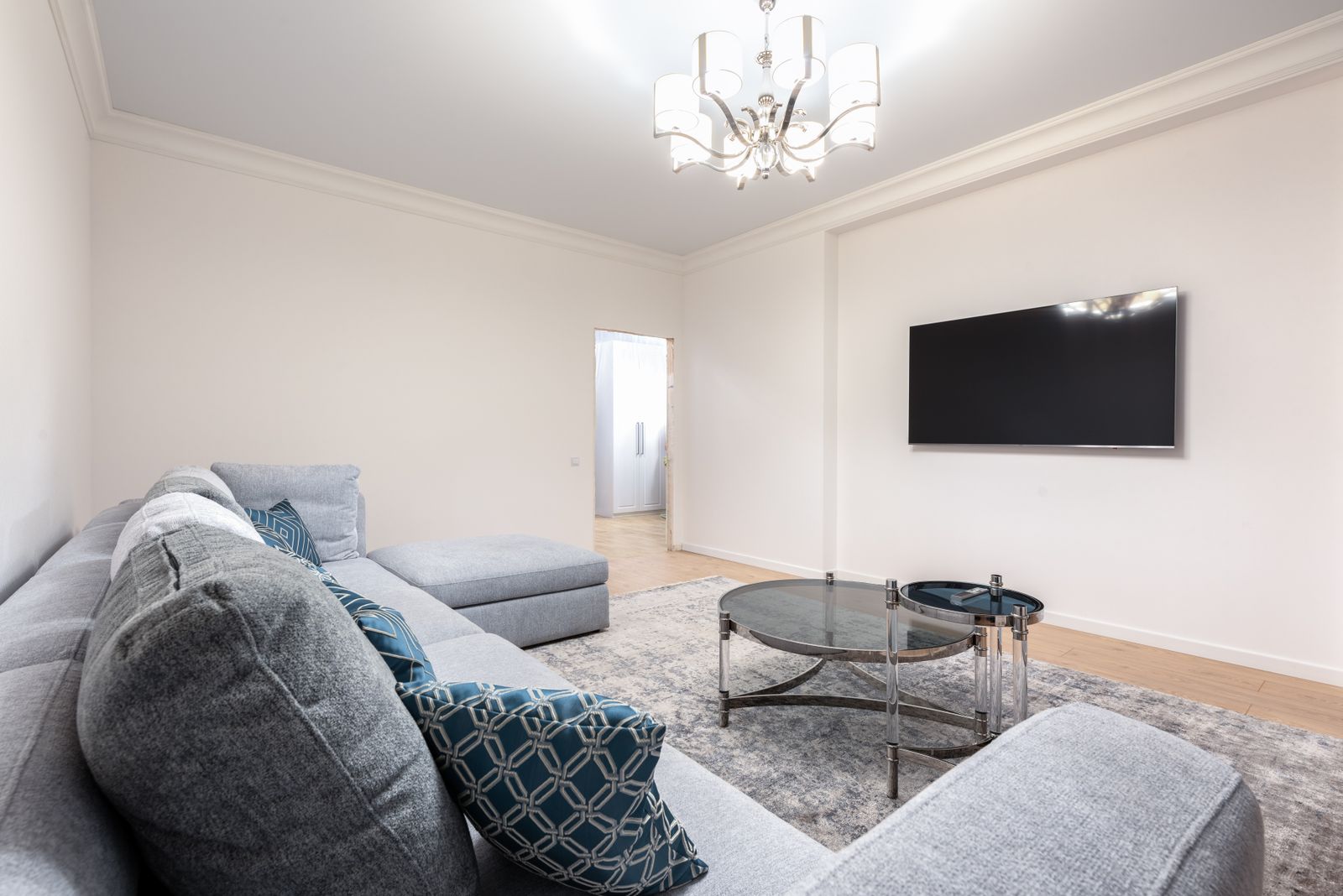
Photo: Max Vakhtbovych / Pexels
Hallways and kitchens
Runners should leave 10–15 centimetres of bare floor on each side, and should not stop short of the doorway. In a hallway, a runner that ends mid-step feels unfinished; run it from door to door, or use two runners with a deliberate gap at a junction.
In kitchens, a washable flat-weave runner in front of the sink is practical and adds warmth to hard floors. Avoid high-pile rugs near water and cooking; they trap grease and are difficult to clean.
Material: match the traffic
Wool is the default for good reason. It is durable, naturally stain-resistant, warm underfoot and ages well. It is also the most expensive. Wool blends bring the cost down while keeping much of the performance.
Jute and sisal are inexpensive and hard-wearing, but coarse and difficult to clean deeply. They suit low-traffic areas and layered looks. Cotton is soft and washable but flattens quickly. Viscose and rayon feel silky but stain badly with water — avoid them in dining rooms and hallways. Synthetic polypropylene is practical for outdoor or high-traffic areas but has a shorter lifespan.
Consider the construction, too. Hand-knotted rugs are the most durable and the most expensive. Hand-tufted rugs are softer and cheaper but can shed. Flat-weave and machine-made rugs are the most practical for busy homes. A good machine-made wool rug will usually outlast a cheap hand-tufted one.
Pile height and practicality
Low-pile and flat-weave rugs are easier to clean and work under doors and chairs. High-pile rugs feel luxurious but trap dust, shed, and are hard to vacuum on hard floors. In homes with pets or allergies, lower is generally better.
Always use a rug pad. It stops slipping, protects the floor, adds cushioning and can extend the life of the rug significantly. A pad slightly smaller than the rug is ideal. On hard floors, a felt-and-rubber pad is more stable than a thin PVC one; on carpet, a gripper pad prevents the rug from wrinkling.
Pattern and colour
If the room is calm, a patterned rug can be the focal point. If the room already has strong art or wallpaper, choose a quieter rug. Dark rugs anchor a light room but show light pet hair; pale rugs brighten a dark room but show dirt. There is no free option — choose the compromise you can live with.
A useful trick is to pull one colour from the rug into the rest of the room — a cushion, a throw, a book spine. That single repetition makes the rug look chosen rather than inherited. If the rug is the most expensive thing in the room, let it lead; if it is not, let it support.
Layering rugs
Layering a smaller rug over a larger one is a useful trick in a room that needs warmth but cannot take a single large rug. A patterned wool rug over a plain jute base adds colour without the cost of a room-sized wool rug, and the jute protects the floor underneath.
Keep the bottom rug large enough to extend beyond the top one on all sides, and choose two textures that contrast rather than compete. Avoid layering two thick piles, which creates a trip hazard and looks lumpy under furniture. A flat-weave bottom layer and a softer top layer is the most practical combination.
Before you buy
Before buying, tape out the dimensions on the floor with masking tape. A rug that looks generous online can look mean in a real room, and the difference between 160 centimetres and 200 centimetres is the difference between a room that works and one that does not. Measure the door clearance as well: a thick rug in a doorway can stop a door from opening.
Finally, rotate the rug every six months if it is in a sunny room. Wool and natural fibres fade unevenly, and a quarter-turn keeps the wear pattern even. A rug that is cared for will last far longer than its price tag suggests.