
Most houseplants do not die from neglect. They die from too much water, too little light and pots with no drainage. The romantic version of plant care — misting, talking to them, buying a special playlist — is far less useful than putting the right plant in the right corner and learning to leave it alone.
These are the plants that forgive the most, the habits that keep them alive, and the warning signs worth acting on before a plant is beyond saving.
Match the plant to the light you have
Before buying anything, look at your room. Does it get direct sun for part of the day, bright indirect light, or only a weak glow through a north-facing window? Most houseplants sold as "low light" will survive in dim conditions but not thrive. A pothos in a dark hallway will live, slowly, with long gaps between leaves. The same plant near a bright window with filtered light will look completely different.
A simple way to judge light is to stand in the spot at midday and hold your hand up. If it casts a sharp shadow, you have strong light. A soft shadow means medium light. No shadow at all means low light. South-facing windows give the most light in the northern hemisphere; north-facing windows give the least.
If your room is genuinely dark, choose snake plants, ZZ plants or cast-iron plants. If you have bright indirect light, monsteras, rubber plants and peace lilies will do well. Direct afternoon sun will scorch many foliage plants; sheer curtains solve this without blocking the light entirely.
The easiest starter plants
Pothos tolerates low light, irregular watering and almost any pot. It trails, so it works on a shelf or in a hanging planter, and it roots easily in water if a stem breaks. Snake plant prefers to dry out completely between waterings and can handle a surprising amount of neglect. ZZ plant stores water in its rhizomes and is ideal for people who travel. Spider plant is forgiving, easy to propagate, and tells you when it needs water by drooping slightly.
Philodendron is similar to pothos but with broader, heart-shaped leaves. Peace lily is dramatic about thirst — it collapses, then recovers within an hour of watering — which makes it a useful teacher. Rubber plant grows into a substantial floor plant and prefers bright, indirect light.
Avoid calatheas, ferns and fiddle-leaf figs as first plants unless you enjoy a challenge. They are beautiful, but they punish inconsistency. If you want one anyway, buy it as a conscious experiment rather than as part of the room's design.
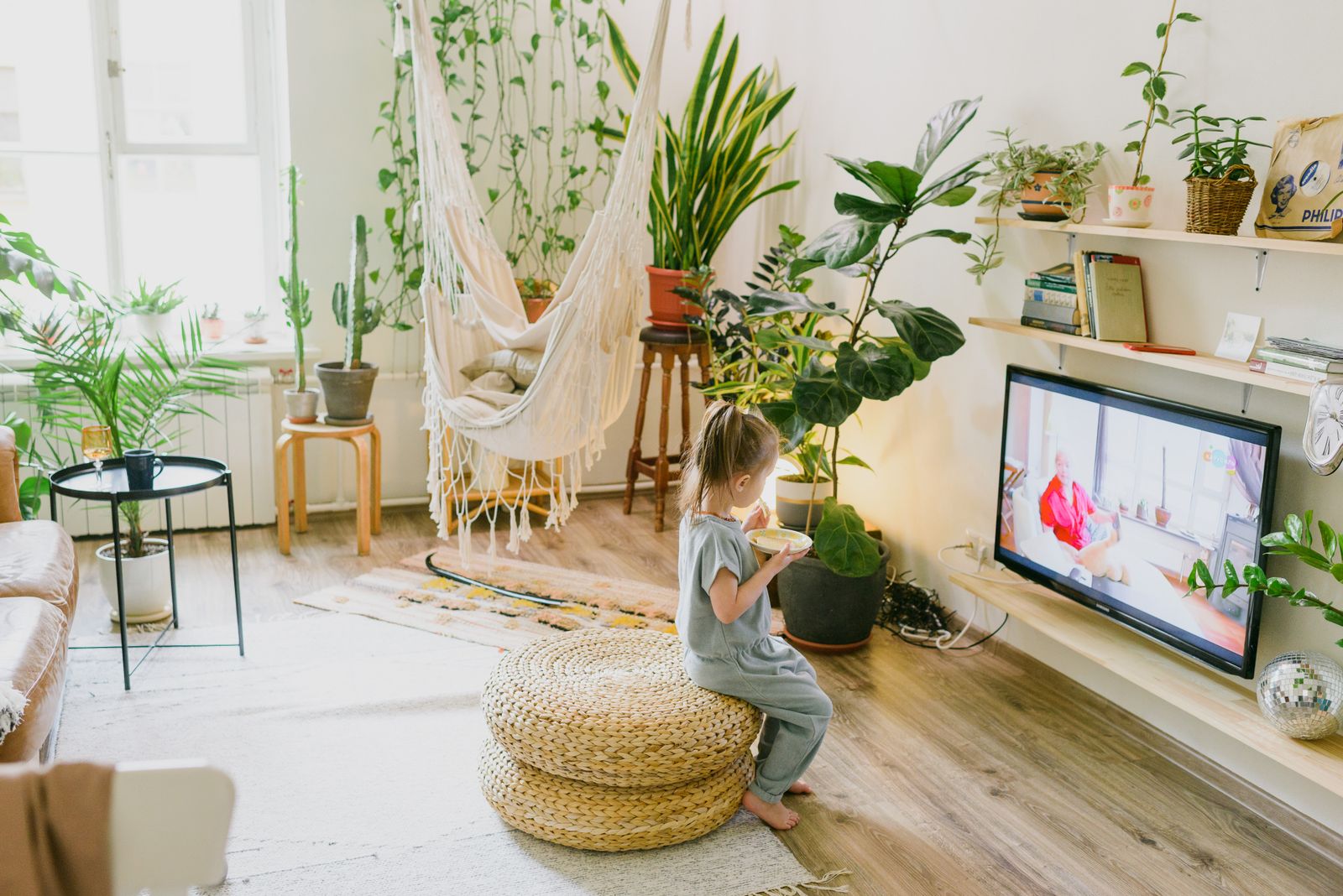
Photo: Ksenia Chernaya / Pexels
Water less than you think
The single most common cause of houseplant death is overwatering. Roots need air, and constantly wet soil suffocates them. Water when the top two or three centimetres of soil are dry, not on a fixed weekly schedule. Stick a finger in, or lift the pot and feel its weight.
When you water, water thoroughly until it runs out of the drainage hole, then empty the saucer. A little and often is worse than a good soak followed by a dry period, because it keeps the lower soil permanently damp while the surface looks dry.
Always use a pot with a drainage hole, and empty the saucer after watering. If you love a decorative pot with no hole, keep the plant in a plastic nursery pot inside it and remove it to water. Never let a plant sit in a puddle; that is how root rot starts.
Use the right soil and pot
Plants do not need a bigger pot every year. Repot when roots are circling the bottom or emerging from the drainage hole, usually every one to three years. Choose a pot only a few centimetres wider than the current one. Too much fresh soil around a small root ball holds moisture the plant cannot use.
Use a proper potting mix rather than garden soil. Most houseplant mixes include perlite or bark to keep the roots aerated. Cacti and succulents need a grittier mix with more sand or pumice; moisture-loving plants such as ferns prefer a mix that retains more water.
Clean leaves and check for pests
Dust blocks light. Wipe large leaves with a damp cloth every few weeks, and shower smaller plants in the sink if they fit. Inspect the undersides of leaves when you water — small webs, sticky residue or tiny moving specks mean pests.
Fungus gnats are the most common indoor pest. They breed in wet soil, so letting the top layer dry out and using a layer of grit or sand on the surface usually solves the problem. Spider mites thrive in dry air and show up as fine webbing; raise humidity and wipe the leaves. Scale insects look like small brown bumps and can be removed with a cotton bud dipped in rubbing alcohol.
Feed lightly and seasonally
Houseplants grow most in spring and summer and slow down in winter. Feed with a diluted liquid fertiliser every two to four weeks during the growing season, and stop or reduce dramatically in winter. Overfeeding causes salt build-up in the soil and burned leaf tips.
If a plant has been in the same pot for more than a year, flush the soil occasionally by watering heavily and letting it drain. That removes accumulated salts and keeps the roots healthy.
Placement is design, too
A plant should earn its position. A tall plant can soften a bare corner or screen an awkward cable. A trailing plant can break up a shelf of books. Group plants in odd numbers and vary heights so the arrangement looks collected rather than lined up.
Keep plants out of draughts and away from radiators, which dry the air and stress the leaves. In winter, move plants away from cold windows; in summer, move them back from direct sun if the leaves start to scorch.
Choose pet-safe and child-safe plants
If you have cats, dogs or small children, check before you buy. Many popular houseplants are toxic when chewed: peace lilies, pothos, philodendrons, monsteras and snake plants all contain calcium oxalate crystals that irritate the mouth and digestive tract. The reaction is usually mild but unpleasant, and it is worth avoiding in a home with a determined chewer.
Safer choices include spider plants, Boston ferns, calatheas, parlour palms and most true ferns. Keep trailing plants out of reach, and place toxic plants on high shelves rather than relying on the animal to ignore them. A hanging planter is often the simplest solution.
No plant is completely risk-free if eaten in large quantities. If you are unsure, check a reputable toxicology list rather than a shop label, and keep the plant label for reference.
If a plant struggles
Yellow leaves usually mean overwatering; brown crispy edges usually mean dry air or underwatering; pale, stretched growth usually means not enough light. Before reaching for a treatment, check the soil, the light and the pot. Most problems are environmental, not diseases.
And if a plant dies, it is not a moral failure. Some rooms are simply better suited to a snake plant than a fern. Work with the light you have, and the plants will do the decorating for you.