
There is a specific kind of French holiday that almost nobody outside France has heard of, and it solves a problem that most people only discover once it is too late to change plans. It is not a package holiday, it is not an all-inclusive resort, and it is definitely not a boutique hotel with a Michelin-starred restaurant. It is a village de vacances: a self-contained holiday village with a kids' club, a swimming pool, sports courts, an all-day programme for the children, and dinner included in the rate. It has been the standard French family holiday since the 1960s, and it is quietly one of the best-value ways to travel with children that exists in Europe.
The largest operator of this model in France is Vacances Bleues, a group founded in Marseille in 1971 by a non-profit association whose stated mission was to make holidays accessible to as many families as possible. That association is still the group's sole shareholder today. No private equity, no quarterly targets, no quarterly earnings call - which is a large part of why the company can run a policy no shareholder-owned group would tolerate, and why the pricing looks the way it does.
What follows is a practical guide to booking one from outside France: which of the three formats to pick, what demi-pension actually includes at the table, how the kids' club really works, and the fine print that will decide whether you are delighted or quietly annoyed in March.
What a French Club Holiday Actually Is
Start with the legal structure, because it explains everything else. The company is VACANCES BLEUES, S.A.S., registered in Marseille under number 421 866 344, with its registered office at 32 rue Edmond Rostand in the 6th arrondissement. It describes itself as part of the French économie sociale et solidaire - the social and solidarity economy, a legal category in which the shareholder is typically an association rather than a fund.
That single fact ripples outward through everything you will encounter as a guest. It is why the group can commit publicly to sourcing restaurant produce from within a 150-kilometre radius of each property. It is why the villages are laid out to be walked rather than driven, with shuttle buses to the ski slopes instead of car parks full of idling cars. It is why the group frames its purpose around three ideas it calls vivre local, vivre bien and vivre ensemble - living locally, living well, living together - and it is why you will be asked your nationality and your children's ages at booking, for reasons that have more to do with French social pricing policy than with marketing.
It also traces its origins to an early holiday village near Lac de Serre-Ponçon, which grew into hotels, then into clubs, then into résidences. The group has been voted France's favourite holiday brand in Capital's annual survey, and in 2024 its hosting arm reported turnover of around €80 million, with roughly 830 staff serving close to 190,000 guests.
What you are actually buying in a club is structure. Someone else has already decided what happens at 9am, what happens at lunch, what happens at 4pm and what happens after dinner, and has built a place where all of it happens within walking distance. For a family with a five-year-old and a nine-year-old, that is worth more than it sounds.
Pick Your Format: Hotel, Club or Résidence
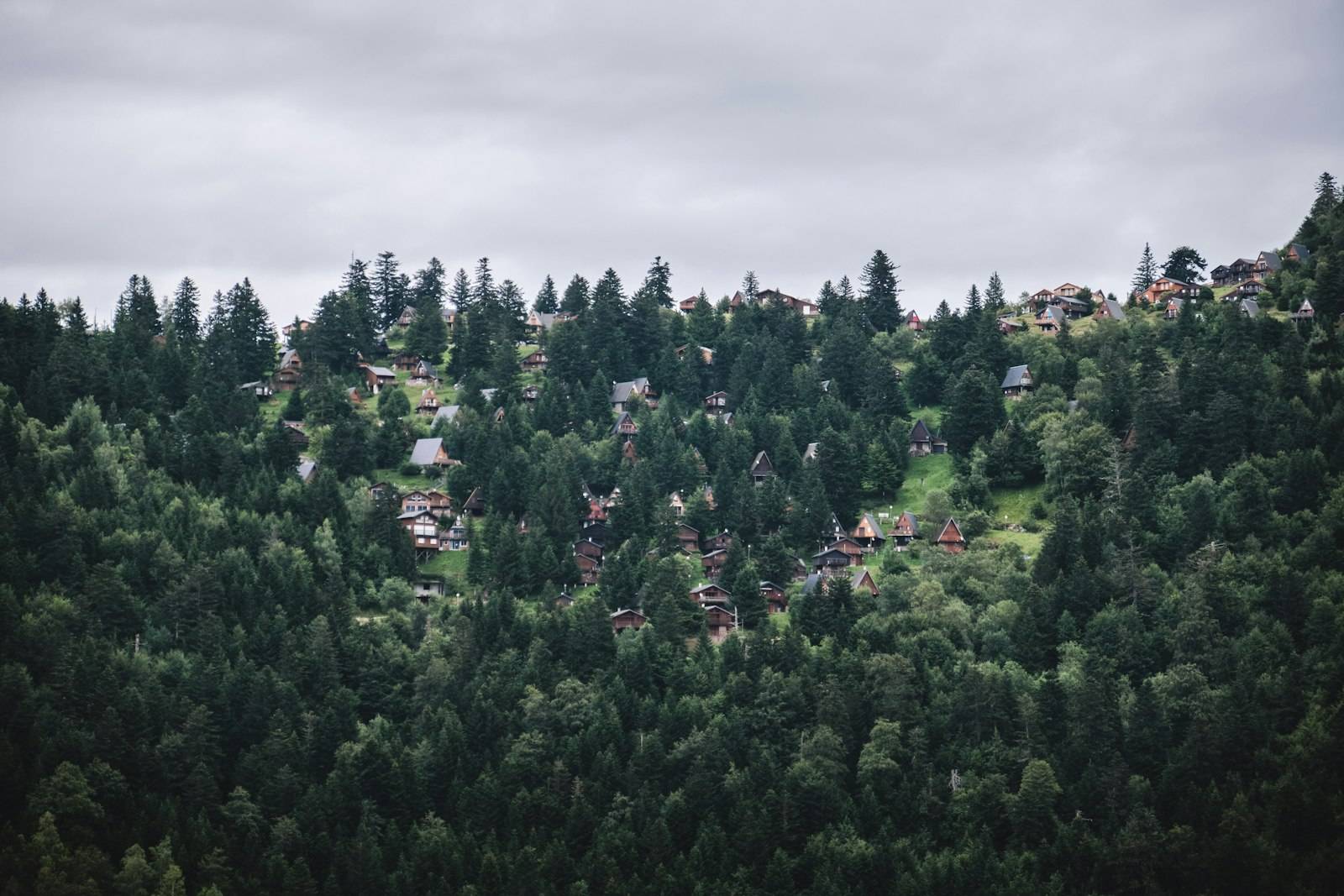
Vacances Bleues covers three genuinely different products, and picking the wrong one is the most common booking mistake I see people make. The names are confusing in translation, so here is the decision you are actually making.
Hôtel is the city and short-break option. Hôtel Le Royal on the Promenade des Anglais in Nice, the Royal Westminster in Menton, Villa Modigliani in Paris, Le Splendid in Dax, the Delcloy at Saint-Jean-Cap-Ferrat, the Castel Luberon in Provence. These are three- and four-star properties with pools, spas and restaurants, but they are not clubs: there is no kids' club, no all-day organised programme, no group entertainment. If you want to walk to dinner, take a train to the next town and be left alone, this is the format you want.
Club is the heart of the brand. Club Plein Sud in Hyères with its private beach, Jardin de l'Atlantique near Les Sables-d'Olonne, Club Arc-en-Ciel Les Karellis in the Maurienne valley - these are the self-contained holiday villages described above. Meals included, kids' club, evening entertainment, multisport courts, and staff on hand from breakfast to after-dinner. You pay more, and the day is planned for you.
Résidence is the flexible middle ground: apartments with kitchens and washing machines, in buildings the group also runs, where you can buy groceries and cook dinner yourself after a day at the beach. Résidence Le Grand Large in Biarritz and Les Provinces Opéra in Paris are good examples. Résidences are the value option and the one most popular with families who want space without paying club prices.
A rough decision rule: a couple who wants a week on the Riviera with a book and a pool should book a hôtel. A family with two children under ten who wants everyone to have a good time should book a club. A family who wants a kitchen and a washing machine should book a résidence. Booking a club because it sounds more like a holiday, then paying club prices for a self-catering week you eat in, is the expensive mistake.
Demi-Pension: What Actually Happens at the Table
This is the single most useful thing an English-speaking reader can understand before clicking through, because demi-pension - half-board - is the standard French hotel meal plan and it does not mean what a British or American reader usually assumes.
Across the French hotel industry, demi-pension means breakfast and dinner. That is two meals, not three. Lunch is not included and is charged separately if you eat in the restaurant, which at a French club typically costs something in the mid-twenties to mid-thirties of euros per adult for a main course and a glass of wine, and rather less for a child. If you want every meal included, the phrase you want is pension complète - full board - which adds lunch to the same package.
This matters more than it sounds, because it is the difference between a package that is genuinely all-inclusive and one that quietly bills you three times a day. Read the rate description carefully: demi-pension with two of the three meals is not a rounding error, it is the largest single line item in a family holiday after the room itself.
There is a second, more pleasant surprise once you are actually in the room. French hotel breakfast is not the continental scramble of a business hotel. It is a petit déjeuner buffet - and at a French club it is a proper one: croissants and pain au chocolat still warm from the oven, a rotating table of cheese, cold cuts, fruit, yoghurt and preserves, and coffee that refills without asking. The bread is the tell. If the bakery is good - and at a village where the group's own stated policy is buying from producers within 150 kilometres, it usually is - then the bread on the breakfast table will be something you think about on the drive home.
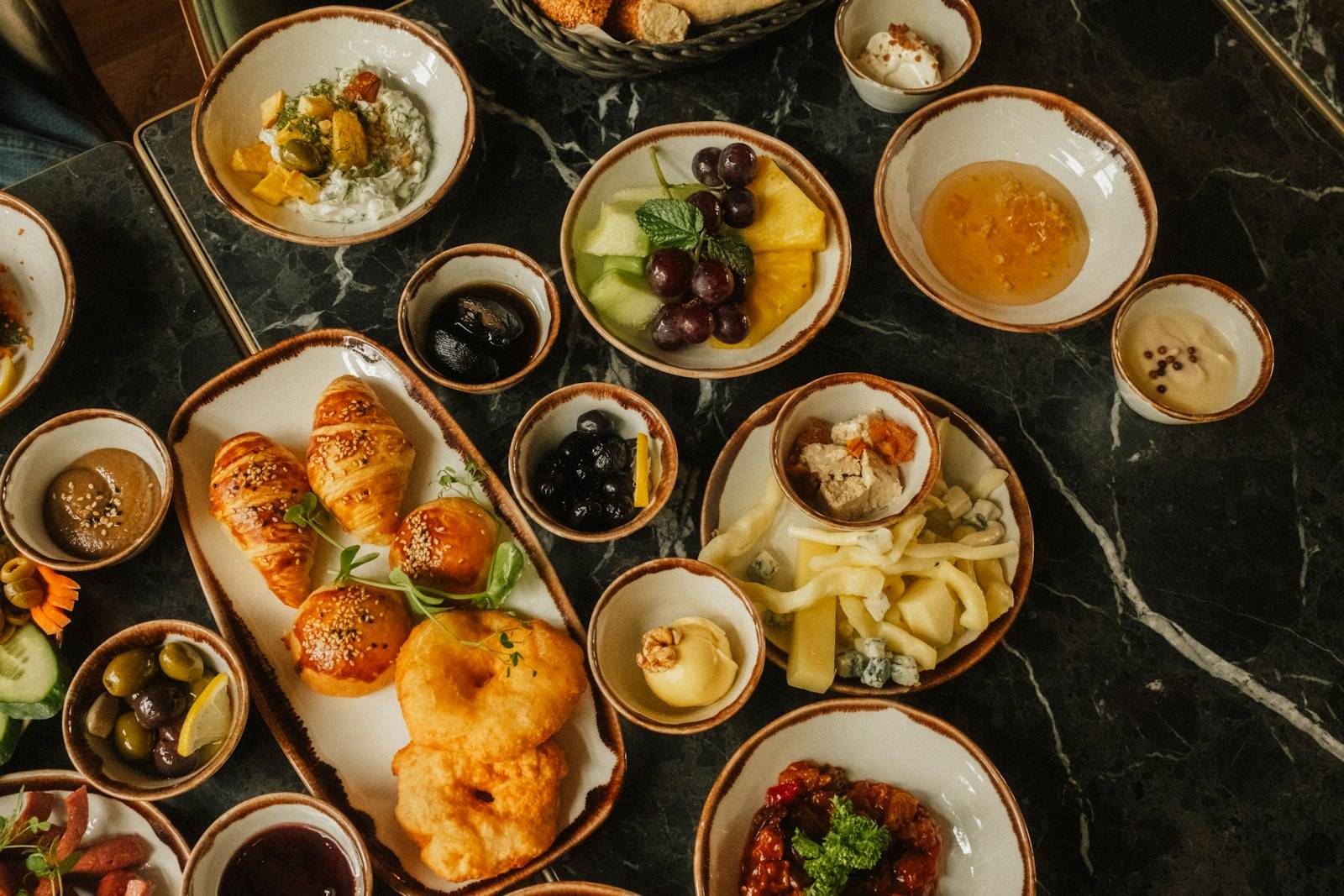
Dinner at a club is normally a set menu served in the main restaurant, and the quality tends to be better than the price suggests - these kitchens are feeding families three times a day in season, which is a discipline that flattens a lot of mediocrity. Children are usually served earlier, at around 19:00, with a separate menu, which means you get an hour of adult dinner rather than negotiating a chicken nugget in a dining room full of teenagers. Ask about it at booking if it matters to you, because the two sittings are the quiet reason club holidays work for parents.
The Kids' Club Question
Any honest write-up of a French club holiday has to deal with the kids' club, because it is both the main draw and the most variable part of the offer.
The model is simple and it is French rather than American: the club runs supervised programmes divided into age bands, and the bands are not arbitrary. Across French holiday villages you will typically find groups roughly corresponding to ages 3-5, 6-8, 9-11 and 12+, with the youngest band staffed by the highest ratio of adults to children and the oldest band given more independence and more freedom to leave the club space. The exact cut-offs vary from one club to another, so check the specific property rather than assuming. Registration is usually on a weekly basis with a time slot chosen at check-in, and space is genuinely limited at peak weeks - the 3-5 band at a popular club over the August fortnight is the first thing to fill up.
Three practical points that international parents consistently get wrong. First, this is not a drop-off and walk-away service: the clubs are usually designed for you to stay, participate or supervise, and the "kids' club" in the British sense - where you hand over your child for the afternoon - does not really exist here. Second, the clubs typically run during specific blocks rather than all day, so a club that closes at 16:30 changes your whole afternoon. Third, the programmes are structured and social - games, crafts, sport, a mini club for the youngest - rather than the open-plan free play most families expect from an American-style resort.
The clubs are also closed or limited outside the school-holiday weeks, and they are the reason the club format peaks and troughs so sharply. If you are travelling in the quiet part of the season with a child who needs entertainment, a club is a much weaker proposition than the brochure implies, and a résidence or hôtel in a town with things to do may serve you better.
Booking from Overseas: The Practical Mechanics
The booking flow is where most international readers hit friction, so it is worth walking through in advance.
The site runs in French, and that is the first thing to accept. The main commercial site is French-first, and while English-language information exists around the group, the booking flow, the terms and the customer service are French. The terms you will meet are ordinary French hospitality vocabulary: demi-pension for half-board, pension complète for full board, taxe de séjour for the local tourist tax, frais de dossier for the booking or administration fee, club and résidence for the two formats. Learn these five and you can navigate the whole site. The reservations line does handle non-French enquiries, which is a reasonable fallback.
You do not need a car, and you probably do not want one. The clusters that matter are all reachable by TGV: Menton and the Riviera properties in roughly five and a half hours from Paris, the Hyères and Var coast properties in a similar time, the Atlantic resorts around Les Sables-d'Olonne in a little under five hours, and the Serre-Ponçon area that the group grew out of at around five hours. If you are arriving from the UK, the Eurostar connection into Paris means the whole thing works as one train journey rather than a flight and a transfer.
Check for a partner code before you book anything. You can browse the current properties and offers on the Vacances Bleues site and see the rates for your dates directly, but this is the most underused discount in the entire system, and it has nothing to do with promotion codes. A French comité d'entreprise - a company works council - negotiates preferential rates for its members, and the booking engine has a dedicated partner-code field for exactly this purpose. Pension funds and mutual insurers have their own agreements. If you or your partner work for a French organisation, or your employer has a group agreement with the brand, the rate you are entitled to is materially better than the public one and nobody will volunteer it.
Le Cercle Bleu is the loyalty programme, and the booking flow has a promo-code field for it. If you are booking a second holiday, or referring the club to family, check whether the programme is worth activating before you pay rather than after.
Le Cercle Bleu aside, the dates that matter are early. The group advertises early-booking discounts of up to 30 per cent against a published deadline, separate offers of up to 50 per cent off for children with the first child free at selected properties, and up to 15 per cent off stays of two weeks or more. These are applied at property level, so the actual value depends entirely on where and when you are going - but the deadline is real rather than theoretical, and the August fortnight and the Christmas school holidays sell out regardless of who owns the hotel.
Who It Is For - and Who It Is Not
This is where honesty matters, because the model rewards a particular kind of booking and quietly penalises everyone else.
It suits you if you are travelling with children between roughly 3 and 11 and want the day structured rather than negotiated; if you want France without the flight and without the airport; if you are booking for a large group or a multi-generational family, where the programming means the adults get a holiday too; if you want a single predictable cost rather than three meals a day of uncertainty; or if your employer or pension fund has a partner agreement with the group.
It does not suit you if you want a boutique or design-led small hotel, if you are travelling solo and value anonymity over programming, if you need a flexible cancellation, or if you want the freedom to eat where and when you please. A résidence solves the last of those, but a résidence is explicitly not a club and does not pretend to be one.
There is also a threshold question worth asking honestly: how much of the appeal is the programming, and how much is the fact that the price is set by an association rather than by a market? A club holiday is not cheap in absolute terms - a family week in the Alps over Christmas is a significant number. But compared with the equivalent independently-booked version of the same week - four rooms, three meals a day, childcare, transfers and a ski pass - the package is usually better value, and it is more certainly better value in August than in February.
Price, Perks and the Fine Print
The fine print is where this kind of booking gets its reputation, so read it before you commit.
- Cancellation follows the strict French scale, and it is worth reading twice because the last step catches people out: €30 to cancel more than 46 days out; 10 per cent between 45 and 31 days; 30 per cent between 30 and 21 days; 50 per cent between 20 and 8 days; and 100 per cent inside the final week or in the event of a no-show.
- Prices exclude booking fees and the local tourist tax. The taxe de séjour is calculated per person per night and paid on arrival, and it varies by commune - some French resort towns charge meaningfully more than others. Over a fortnight for a family of four it adds up to a sum worth budgeting for rather than discovering on arrival.
- Your money is protected. The group's financial guarantee is provided by UNAT, the French national federation of tourism associations, and it is registered as a tour operator with Atout France. The booking engine also runs an online pre-check-in for each reservation once you have an account.
- Meal plans are priced separately from the room, and the difference between demi-pension and pension complète across a week is the single largest variable cost in the whole booking. Decide it before you search, not at checkout.
- Kids' club places can be full at peak times even when rooms are available, because the club is capacity-limited by staffing ratio rather than by beds. Book early.
There is also a substantial business-events arm running through vacancesbleues-business.fr, which reported €11.5 million in 2024, up 22 per cent on 2023, and now sits between 20 and 30 per cent of turnover at several of its three- and four-star sites. If you are booking a residential seminar or a company retreat in France, that is a serious operation rather than a sideline - and it is the single easiest way for an international company to get a partner code worth having.
What Could Be Better
Where it works: the value proposition is genuinely strong for the family it is designed for. The programming, the childcare ratios and the all-in-one structure solve real logistical problems, and the fact that the shareholder is an association rather than a fund means the interests sit closer to guests than to an exit. The food is the other quiet strength - a village feeding itself on local produce and bakery bread is a better bet than most resorts of its price.
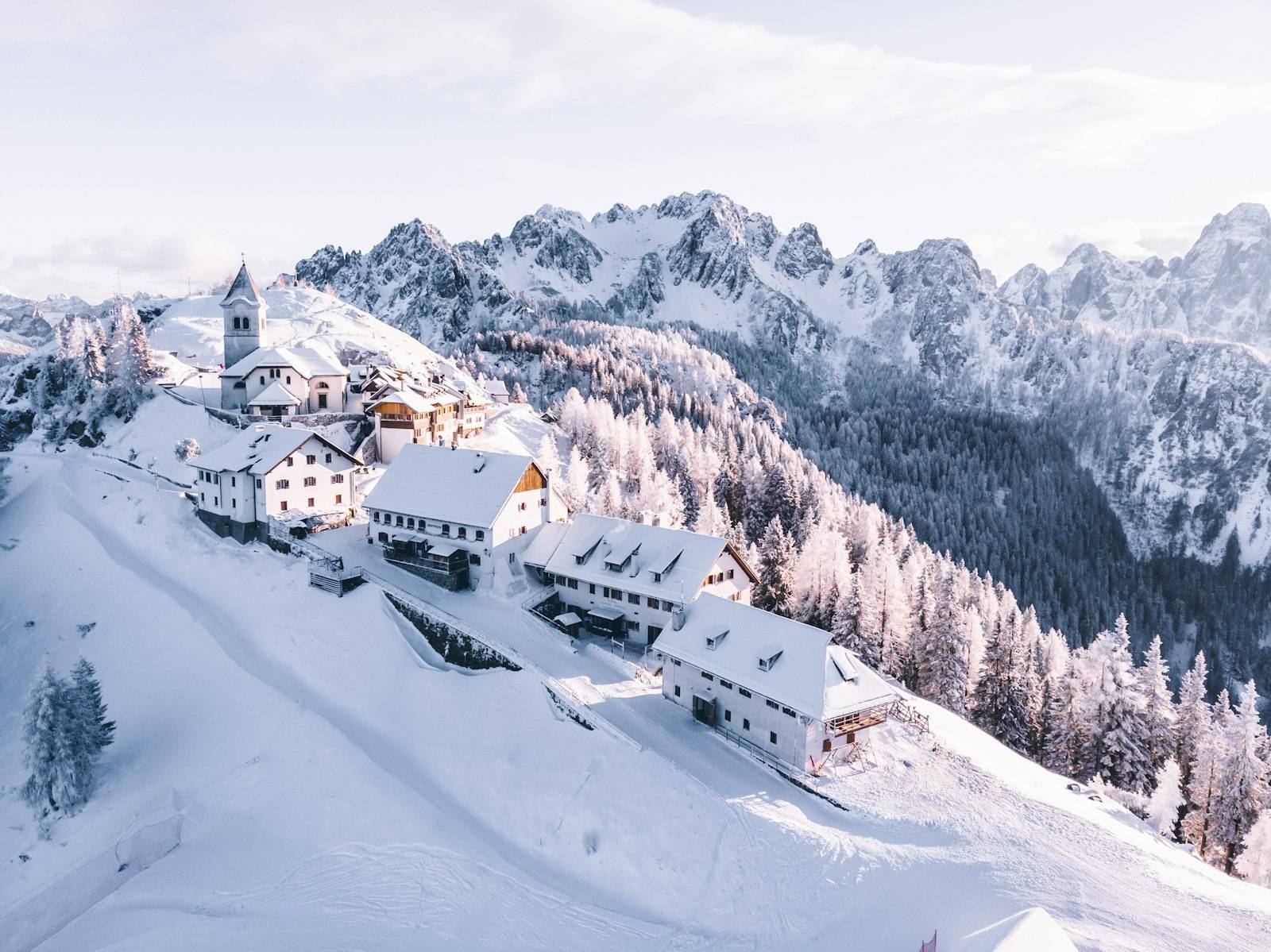
Where it falls short: the site is French-first, and for a reader who does not read French the booking flow is a genuine obstacle rather than a minor one. The product is deliberately standardised, and if you are the sort of guest who notices when breakfast is served from a machine, a club will frustrate you - the programming is the point, and it leaves little room for individuality. Club holidays are not cheap, and the honest comparison is not against a cheap hotel but against what the same family week would cost organised independently. Kids' club places fill up first and are not held against your reservation unless you specifically book them. And in the shoulder months, when the discounts are deepest, the clubs are at their thinnest and the villages are at their quietest - a winter week in an alpine club is a different proposition from the summer week that the photographs are of.
Conclusion
French club holidays remain one of the best-understood-by-locals and least-understood-by-visitors holiday formats in Europe, and that is a shame, because the fundamentals are strong: a village built around a pool and a bakery rather than a car park, meals included, childcare that actually works, and a price anchored by an ownership structure that has no interest in squeezing you.
The mechanics are learnable in an afternoon. Learn what demi-pension covers, learn what pension complète adds, learn that a résidence is not a club, learn that the kids' club fills up before the rooms do, and read the cancellation table before you pay rather than after. Do those five things and you can book one with more confidence than most French families manage, and you will probably spend less than the equivalent trip organised from scratch.
Ready to look at the properties and the current offers?
Browse Vacances Bleues clubs, hotels and residences for your dates →
This article contains affiliate links. If you make a purchase through these links, we may earn a commission at no additional cost to you. All opinions expressed are our own and reflect our genuine assessment of the brand and its model. Thank you for supporting Travel Style Hub.
Image credits: Quentin Baret, damien dufour, Vincent Yap and Daniele Buso via Unsplash.