
There is a particular kind of travel bargain that has nothing to do with a cheap flight and everything to do with timing. A five-star hotel in Crete with a sea view, sold at a price that would have been unthinkable a fortnight earlier. A week in the Maldives on a full-board basis. A guided circuit through Morocco at a rate that undercuts the tour desks in the Rue de Rivoli. These are not flash discounts engineered for the news ticker — they are a business model, and the company that has built the biggest version of it in France is Voyage Privé.
I went into it expecting a discounter. I came out of it thinking it is closer to a clearance channel for high-end inventory — closer, in other words, to the way the fashion trade handles end-of-season stock than to anything you will find on a conventional booking site.
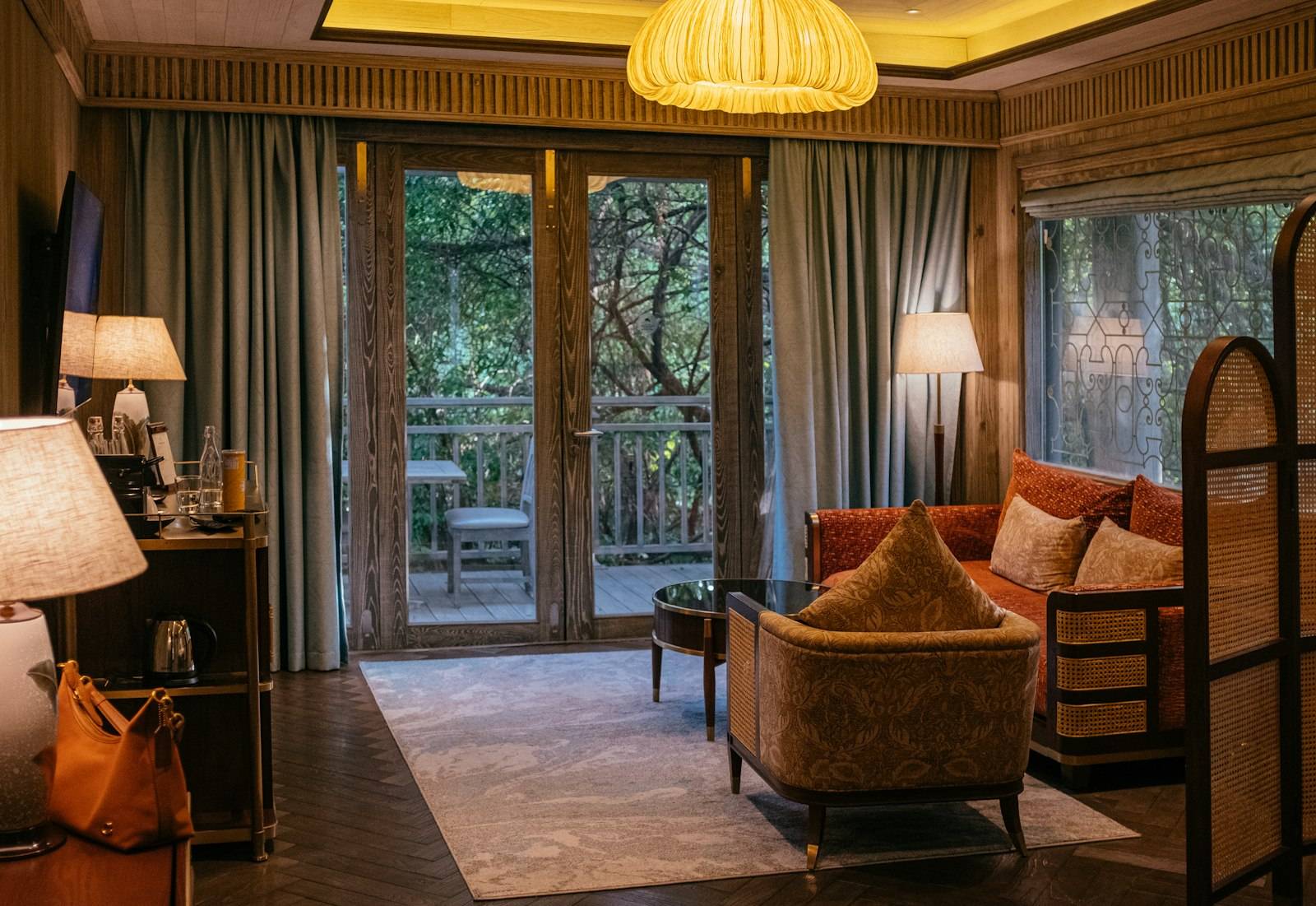
What Voyage Privé Actually Is
Voyage Privé was launched in France in 2006 by a group of tourism and e-tourism professionals. Their own account of the company describes the model as a "unique concept" and positions the site as the first private travel sale platform in the country — vente privée, a French retail tradition applied to travel. The legal entity behind it is VPG, a simplified joint-stock company registered in Aix-en-Provence under RCS number 479 345 043, listed as a tour operator with registration number IM013100142.
The scale is the striking part. The company says it has 44 million members across its various country sites — France, but also Belgium, Switzerland, the Netherlands, Italy, Spain, Germany, Austria and the United Kingdom. What all those members share is the same proposition: a weekly email, a rotating catalogue of high-end trips, and access to prices that last roughly a week.
Membership is free. That part matters, because without an account you cannot buy anything. The site gates its catalogue behind a login, and the weekly email is effectively the shop window. Sign up, and once a week you are told what has been released.
How the Private Sale Model Actually Works
The mechanics are simpler than the marketing suggests, and once you understand them the whole category becomes much easier to navigate.
Hotels and tour operators have inventory they cannot sell at rack rate — a week in late September, a block of rooms after a peak week, a coach that has not filled. Voyage Privé buys or guarantees that inventory in bulk and releases it to members at a discount, with two constraints that create the urgency: the offer is available for a limited period — seven days on average, according to the company — and it is exclusive to members.
That combination is the whole trick. The time limit compresses demand into a narrow window, and the member-only gate means the same room is not sitting on a public site at the same price. You are not getting a coupon; you are getting a negotiated allotment released to a closed audience.
The headline number is "up to -70%", and it is worth reading precisely. "Up to" is doing real work in that sentence. The deepest discounts land on specific hotels in specific weeks — shoulder seasons, newly reopened properties, rooms the hotel would rather not carry as public rates. The discount on the trip you actually want in the week you actually want is usually good, occasionally very good, and rarely the maximum. The company also markets a "best price guaranteed" positioning, which is a different promise: it means they claim their price is the best available for that product.
What You Can Actually Book
The catalogue is broader than "luxury hotels", which surprises people who only know the brand as a hotel site. It breaks down into roughly six families:
- Hotel stays and all-inclusive resorts — the core of the site. Four and five-star properties across the Mediterranean basin, the Atlantic coast, the Indian Ocean and the Caribbean. Recent listings have included the Park Hyatt Abu Dhabi Hotel and Villas on Saadiyat Island, the Kenzi Menara Palace and a luxury desert camp in Agafay, the Neme Slow Living Retreat in Crete and the Albatros Citadel Resort in Hurghada.
- Guided circuits — escorted, multi-stop itineraries across Morocco, Jordan, Egypt, India, Vietnam, Thailand, Japan, Cuba, Oman, Mexico, Peru, the Philippines, Croatia, Scotland, Bali and the Cape Verde islands.
- Cruises — including the dahabeya style Nile trips between Luxor and Aswan that sit somewhere between a river cruise and a private yacht.
- Ski weeks — Courchevel, Tignes, Avoriaz, Valmorel, Les Deux Alpes, La Plagne, plus the Austrian, Italian, Swiss and Pyrenean Alps.
- Last-minute departures — discounted hotels and flight-plus-hotel packages, from a few weeks out to the end of the season. Aimed squarely at people with flexible leave who want somewhere warm quickly.
- Theme parks and family trips — Disneyland Paris, Puy du Fou, Parc Astérix, Europa Park, Walibi, Efteling, Gardaland, Phantasialand, LegoLand and the Zoo de Beauval, usually with a hotel attached.
There are also the category pages that quietly do a lot of the work: "when to go" guides for the Maldives, Mauritius, Zanzibar, Sicily, Bali and Costa Rica; city-break collections for Paris, London, Rome, Dublin, Prague, Vienna, Amsterdam, Barcelona and Seville; and a long list of "all-inclusive" and "flight plus hotel" packages. The catalogue is large enough that the most common way people find a bargain here is by browsing a destination page rather than by searching for a specific hotel.
Who It Is For — and Who It Is Not
This is where the honesty matters, because the model rewards a particular kind of behaviour and quietly penalises everyone else.
It suits you if you can be decisive. You read the email, you see a hotel you love at a price that would not be there next week, and you book within a day or two. You travel in shoulder season. You like the idea that a room is being released in a controlled way and that acting early is the entire mechanism. You are comfortable with a booking flow that assumes you know French tourism vocabulary — séjour for a stay, circuit for a guided tour, voyage tout compris for full board, dernière minute for last-minute.
It does not suit you if you need to lock a specific date eight months ahead, if you travel at the absolute peak of July or the Christmas fortnight, if you want to see the full price of every room before committing to an account, or if a French-language customer journey is a barrier. The English site exists and works, but the depth of the English catalogue and the speed of English-language support both trail the French operation.
There is also a threshold question worth asking yourself honestly: how much of the appeal is the discount, and how much is the idea of buying a five-star room at a price that feels illicit? For some people it is purely rational. For others the mechanism itself — the flash window, the member gate, the sense of a room being released rather than sold — is the point. Both are fine. It is just worth knowing which one you are buying.
Price, Perks and the Fine Print
Membership itself is free and, on the company’s own description, comes with a weekly selection email, a help centre open 24/7, and a secure payment flow. The transactional bits are standard: card, bank transfer and the usual instalment options through an Alma-style facility appear at checkout on eligible sales.
The fine print is where private-sale travel gets its reputation, so read it before you fall in love with a price.
- Deposit and balance schedules vary by sale. The Conditions Générales de Ventes — the current version is dated 18 February 2026 — set a deposit at booking and the balance at a point before departure. The percentage and the deadline differ from sale to sale, so check the specific offer rather than assuming.
- Cancellation terms are tiered, and the early tiers are not generous. As with any non-refundable hotel rate, a cancellation in the first weeks of a flash sale typically costs you the full amount, with penalties softening further out. This is the single most important line to read.
- Optional insurance is sold alongside, from providers including Mutuaide, Europ Assistance and Xplorassur, under what the site calls "Flex" conditions. Travel dispute mediation is available through the official tourism mediator if something goes wrong.
- The price is not always what the "exclusivity" word implies. Some of these rooms are discounted because the hotel is testing a new property, and a discounted rate can exist elsewhere for the same dates. Compare before you assume you have beaten the system.
What Could Be Better
What works: the depth of the catalogue is genuinely impressive for a member-only club, and the last-minute sections are the single most useful part of the site for anyone with flexible dates. The booking flow is clean, and the "when to go" destination pages are better written than most travel-trade content of the same kind.
Where it falls short: the -70% figure is a marketing maximum that a first-time buyer will almost certainly never meet, and the site does not make it easy to see what the realistic range of savings looks like. The member wall sits in front of the catalogue rather than behind it, which makes browsing and comparison needlessly awkward for anyone still deciding. And the seven-day window, marketed as urgency, is a genuine problem for families coordinating around school holidays, for people who need to clear leave with an employer, and for anyone who books with the benefit of a comparison site and a second opinion. The French-first design shows: search terms, filter labels and even some hotel descriptions do not always translate cleanly, and there is no English-language equivalent of the help centre's depth.
Conclusion: The Art of the Flash Sale
Voyage Privé is not a cheap-flights site dressed up in nicer photography, and treating it that way is the most common mistake. It is a clearance channel for genuinely good hotels and tours, sold to a closed audience on a timer, and the economics work because the inventory it buys is inventory someone else wants to move.
Used well, it rewards a very specific behaviour: join free, read the weekly email, know your two or three preferred destinations before the offer lands, and be ready to book within the window. Used badly — expecting the maximum discount, expecting flexibility after booking, expecting the whole catalogue in your language on day one — it will disappoint.
What stayed with me, in the end, was how ordinary the underlying mechanism was. Somebody negotiated a block of rooms, agreed a price, and put a clock on it. That is the whole trick, and it is also why the prices are real when you can see them.
Ready to see what is currently on offer?
Browse the current Voyage Privé private sales and last-minute departures →
This article contains affiliate links. If you make a purchase through these links, we may earn a commission at no additional cost to you. All opinions expressed are our own and reflect our genuine assessment of the brand and its model. Thank you for supporting Travel Style Hub.
Image credits: 雙 film and Huy Phan via Unsplash.