
You do not need new cabinets to change how a kitchen feels. Most of the difference comes from what is left on the counter, how the lighting falls, and whether the room looks cared for rather than merely used. A few deliberate changes can make a rental kitchen read as considered — without touching the tiles.
The goal is not a showroom. It is a room that works for cooking and still looks good when you walk in with a bag of groceries.
Clear the counter, then put three things back
The most effective styling move is subtraction. Clear everything off the worktop, wipe it down, and look at the space. Then put back only what you use daily, plus two or three objects you genuinely like looking at. A wooden board, a ceramic bowl, a small plant or a good knife block is enough.
Appliances that live on the counter — toaster, kettle, coffee machine — should be grouped in one zone rather than spread along the length of the worktop. Clustering them frees up a clear run of surface, which is what makes a kitchen look calm. If an appliance is used less than once a week, store it and bring it out when needed.
A good rule is to keep at least 40 percent of the worktop empty. That empty run is what makes the room feel spacious, and it is also where you will actually chop vegetables.
Think in work zones
Even a small kitchen benefits from being organised by task. The sink zone holds washing-up liquid, a sponge, a brush and a drying rack. The cooking zone holds oil, salt, utensils and the most-used pans. The preparation zone should be as clear as possible. The storage zone holds dry goods and less-used equipment.
When things are grouped by use, the kitchen looks logical rather than cluttered, and cooking becomes faster. It also stops the counter from becoming a general dumping ground, because every item has an obvious home.
Use open shelving carefully
Open shelves can look beautiful or chaotic depending on what is on them. Keep the palette consistent: matching glasses, a few ceramic plates, one or two wooden pieces, a small plant. Avoid packing every shelf to the edge. Leaving a gap at the end of each shelf is what makes the display feel curated instead of like storage that lost its doors.
If you have closed cabinets, consider removing one door on a small section to create an open shelf. It costs nothing and is easy to reverse. Store the door somewhere safe so you can put it back before moving out.
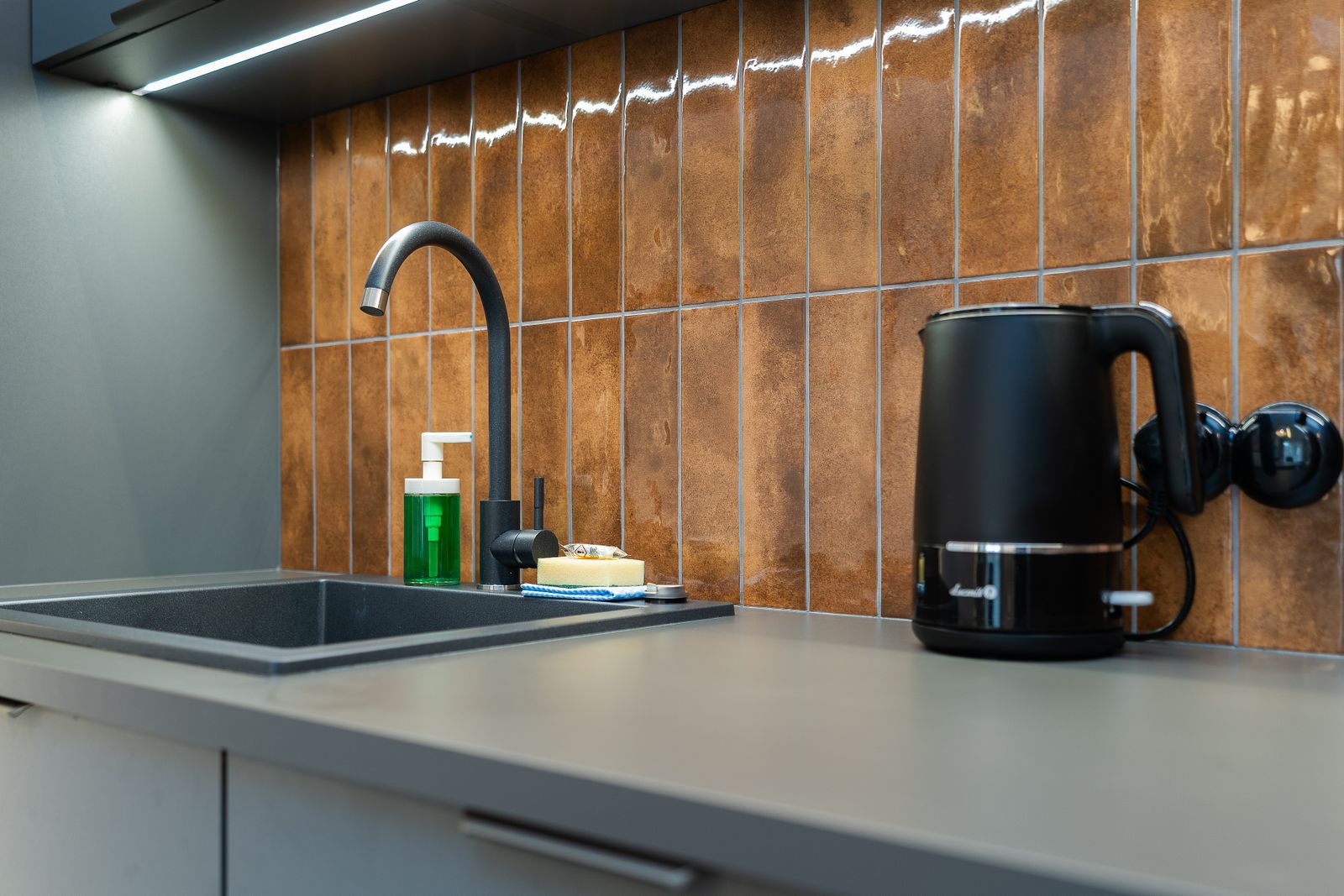
Photo: Mateusz Pielech / Pexels
Change the hardware
Cabinet handles and knobs are the cheapest visible upgrade in a kitchen. Swapping dated pulls for simple brass, matte black or brushed steel ones takes an afternoon and transforms the cabinetry. Keep the old hardware in a bag so you can put it back before moving out.
Measure the hole spacing before ordering. Handles come in standard centres — 96 mm, 128 mm and 160 mm — and a mismatch means drilling new holes. If you are not confident with a drill, choose knobs rather than bar handles; they often use a single hole and are easier to swap.
Light the worktop, not the ceiling
One bright ceiling light makes a kitchen look flat. Add a warm under-cabinet strip or a small lamp on an open shelf. The light bouncing off the worktop creates depth and makes the room feel welcoming after dark. Warm white (2700K) is the right choice here, as it flatters food and wood.
If you cannot wire anything, a rechargeable puck light or a plug-in strip is enough. Place it toward the front of the cabinet so the light falls on the work, not behind the toaster. This is one of the highest-impact, lowest-effort changes in the whole room.
Choose one texture to repeat
Wood, linen, ceramic, glass, marble. Pick one material and repeat it two or three times — a wooden board, wooden utensils, a wooden stool. Repetition is what makes a group of objects look intentional. Two textures are usually enough; three can start to feel busy in a small kitchen.
Natural materials soften the hard surfaces that every kitchen has. A linen towel, a ceramic crock for utensils and a wooden bowl will do more for the room than another appliance. Keep the colours muted so the textures, not the hues, do the talking.
Hide the clutter that has no style
Bins, cleaning products, plastic containers and charging cables are not decor. Give them a home inside a cabinet, a drawer or a lidded basket. If the kitchen has no storage, a simple tray on top of the fridge or a slim trolley beside the counter can absorb the overflow.
Use matching containers for dry goods if they are on display, but do not decant everything. A row of identical jars looks tidy; a row of half-empty bags clipped with pegs does not. If you decant, keep the cooking instructions on a note inside the cupboard.
Deal with the sink area
The sink is the focal point of most kitchens, and it is usually the messiest. A simple ceramic soap dish, a brush with a wooden handle and a folded linen towel will make it look considered. Hide the washing-up liquid in a plain bottle or under the sink.
Replace a tired draining board with a compact folding rack that disappears when not in use. In a small kitchen, the sink area is often the only place where things can dry, so give it a clear, deliberate arrangement rather than letting it accumulate.
Finish with textiles and scent
Textiles are the cheapest way to soften a kitchen. A linen tea towel folded over the oven handle, a cotton apron on a hook and a small runner on the worktop add colour and texture without clutter. Choose two or three colours that relate to the room and repeat them; a single bright towel in an otherwise grey kitchen looks accidental.
Scent matters in a room where food is prepared. A small bowl of citrus peel, a sprig of rosemary in a jar or a candle burned after cooking will do more than a synthetic air freshener. Keep the scent light — the kitchen should smell clean, not perfumed.
A note for renters
Almost everything here is reversible. Hardware can be swapped back, shelves can be filled and painted over, and plug-in lighting leaves no trace. Avoid painting cabinets without permission, and do not drill into tile if you can use adhesive hooks instead. Take photographs before you start so you know exactly how to return the kitchen to its original state.
None of this requires a renovation. It requires an hour, a bin bag and the willingness to leave some space empty. That empty space is what will make the room feel expensive.