
A good bedroom is not decorated so much as engineered. The goal is a room that helps you fall asleep and does not wake you up. That means less visual noise, warmer light, a comfortable temperature and a bed that is genuinely comfortable. Hotels understand this; most homes do not.
The changes below range from free to expensive. Start with the free ones — light, clutter, temperature — because they often make the biggest difference.
Start with the bed, not the accessories
The single most important purchase in a bedroom is the mattress, followed by the pillow. Everything else — throw cushions, artwork, a bench — is optional. Spend your budget on the things your body touches for eight hours a night, and economise on the rest.
A mattress should support your sleeping position and suit your body weight. Firmer is not automatically better, and a mattress that felt wonderful in a shop for two minutes may feel very different after a week. Look for a trial period and a return policy, and use it.
Pillows matter just as much. Back sleepers usually need a medium loft, side sleepers a higher one to fill the gap between shoulder and head, and stomach sleepers a low, soft pillow. If you wake with neck pain, the pillow is the first thing to change.
Keep the palette quiet
Bedrooms benefit from fewer visual decisions. Two or three related tones on the walls, bedding and curtains; one texture for warmth; one small accent. This is not about making the room bland. It is about removing the small jolts of colour and pattern that keep the eye moving when you are trying to switch off.
Muted greens, warm greys, soft blues and oatmeal all work well. Very dark walls can make a bedroom feel cocooning, provided the room has enough natural light during the day and warm bedside lamps at night. Avoid bright reds and saturated oranges in a bedroom; they are energising rather than restful.
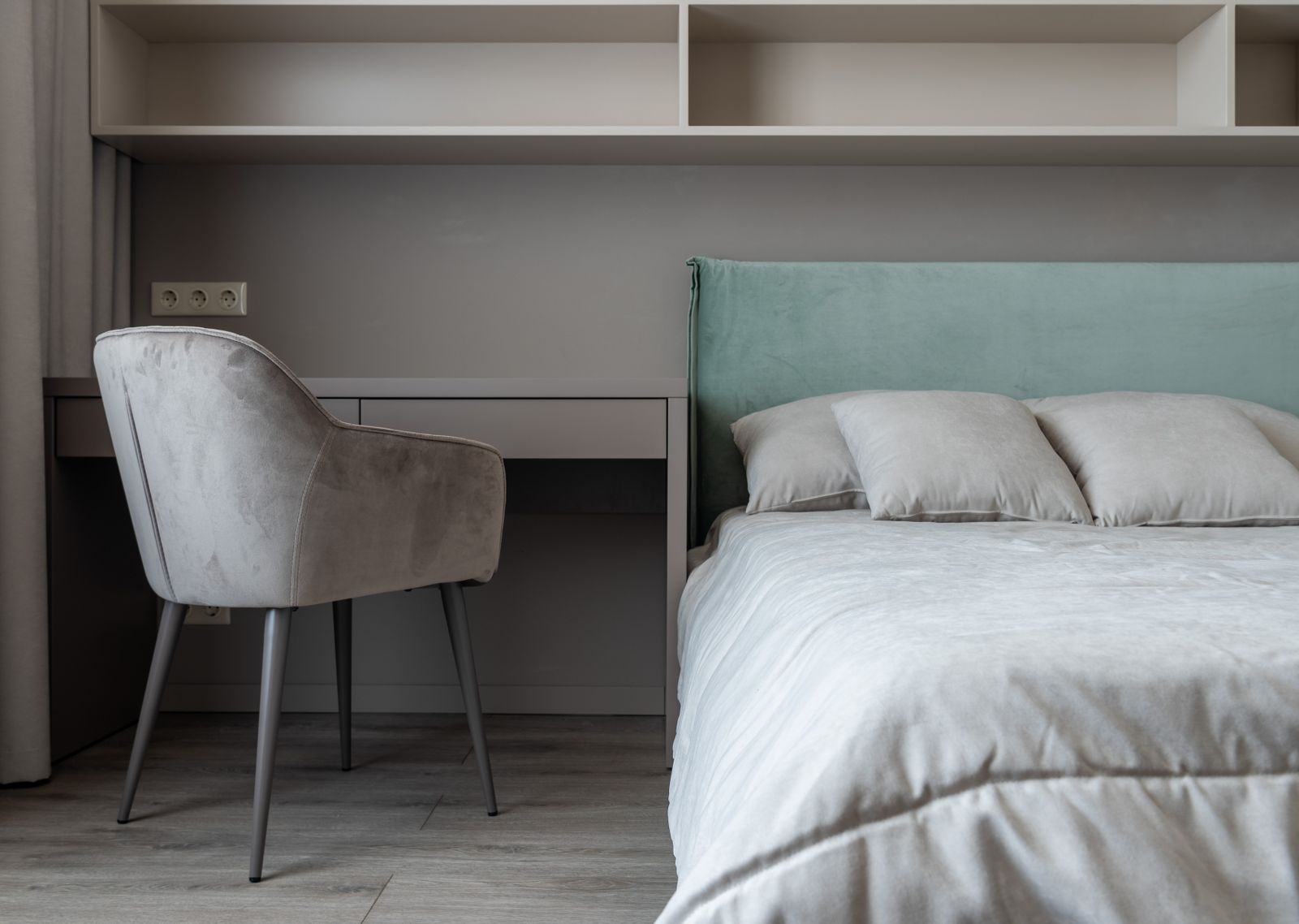
Photo: Max Vakhtbovych / Pexels
Layer the bedding
Hotel beds feel good because of layers, not because of thread count alone. Start with a fitted sheet in a natural fibre, add a duvet with a breathable cover, and finish with a throw or blanket at the foot. Natural fibres — cotton, linen, wool — regulate temperature better than polyester and feel better against the skin.
Thread count is a poor guide on its own. A 300-thread-count long-staple cotton can feel better than a 600-thread-count sheet made from short fibres. Look for long-staple or extra-long-staple cotton, linen or a cotton-linen blend, and check the weight of the fabric rather than the number on the packet.
Wash bedding weekly and rotate two sets so one is always clean. A spare set of pillowcases is a small luxury that makes the bed feel fresh between full washes. In winter, a wool throw adds warmth without the bulk of an extra duvet.
Control the light
Blackout curtains or blinds are the most effective sleep upgrade after the mattress. They block early summer light and streetlamps, and they make the room feel more private. If you rent and cannot drill, a tension rod with blackout panels is a workable compromise.
For evening light, use two bedside lamps with warm bulbs rather than a central ceiling light. Avoid cool white and avoid any light source that shines directly into your eyes when you are lying down. A dimmer or a smart bulb that fades to amber is worth the small cost.
Also deal with small light sources: standby LEDs on televisions, chargers and routers can be surprisingly bright in a dark room. A piece of black tape over an LED is a cheap fix that many people never think to make.
Keep the room cool and quiet
Most people sleep best in a room around 16–19°C. If the bedroom is too warm, open a window before bed, use a lighter duvet, or reduce the radiator setting. A stuffy room is one of the most common reasons for waking in the night.
Noise is harder to fix, but heavy curtains, a rug and a solid door all help absorb sound. If traffic noise is a problem, a white-noise app or a small fan can mask it. Earplugs are unglamorous and effective.
Remove the screens and the clutter
If possible, keep the phone out of arm's reach and the television out of the bedroom. This is not a moral instruction; it is a design decision. A screen on the wall becomes the focal point and changes the room's purpose. A pile of laundry on the chair does the same thing more cheaply.
Give every object a place. A small tray for jewellery, a hook for tomorrow's clothes, a lidded basket for anything that does not belong. Visual order is not about emptiness; it is about knowing where things go. Make the bed each morning — not for appearances, but because a made bed signals that the room is cared for and makes the rest of the clutter easier to notice and clear.
Add storage that fits the room
If the bedroom is small, use the height. A tall wardrobe, under-bed drawers or a bench with storage can absorb clothes and bedding without eating floor space. Keep the bedside table minimal: a lamp, a book, a glass of water and perhaps one small object. Anything more becomes clutter within a week.
Choose furniture with legs rather than solid bases in a small bedroom; visible floor makes the room feel larger. A light-coloured rug under the bed adds warmth and ties the scheme together.
Improve the air and the scent
Air quality affects sleep more than most people realise. Open a window for ten minutes before bed, even in winter, to reduce carbon dioxide and stuffiness. If the room is very dry in winter, a humidifier can help with dry throats and irritated sinuses; if it is damp, a dehumidifier or better ventilation is the priority.
Scent is optional, but a subtle one can signal that the room is for rest. A linen spray, a candle burned earlier in the evening or a few drops of lavender on a cotton pad near the bed are enough. Avoid strong synthetic air fresheners, which can be irritating in a small room, and never leave a candle burning while you sleep.
The final test
Stand in the doorway with the lights off. Is the room restful? Is there anything that would catch your eye or your foot in the dark? Fix that one thing. A calm bedroom is not the most decorated room in the house. It is the one that asks the least of you at the end of the day.