
Ask a French family where they stayed last summer and the answer is almost never a hotel. It is an apartment with a washing machine in a residence by the marina, a mobile home on a campsite in the Landes, a chalet above the treeline at Val Thorens, a converted fisherman's cottage on the Brittany coast. Self-catering accommodation - not a room with a breakfast buffet - is the default French holiday, and it has been so for decades.
It is also the part of French tourism that outsiders find hardest to book. The supply is split across several genuinely different product types - professionally run tourist residences, campsites with mobile homes, flats rented by private owners, standalone chalets - and each has its own rules about deposits, tourist taxes, linen, key collection and cancellation. Add a booking flow that rewards a bit of homework, and the result is that a lot of visitors default to a hotel, or book something in a language they do not read.
The platform that has made this manageable is maeva.com, the French booking site that brings all of those categories under one roof. It is the operator behind Vacansoleil, it runs an English-language version of the same catalogue, and it has grown into the default way millions of visitors book a self-catering French holiday.
What follows is a practical guide: the four different things you can book, how the reservation actually works from click to key, what a week really costs once every fee is counted, and the guarantees that are genuinely unusual - and the ways the platform will still let you down.
What maeva Actually Is
Start with the legal structure, because it explains the rest of the experience. The site is published by La France du Nord au Sud, a French simplified joint-stock company (SAS) with share capital of 40,000 euros, registered in Paris under RCS Paris B 483 315 362, SIRET 483 315 362 00044, and sitting at 11 rue de Cambrai, espace Pont de Flandre, 75019 Paris. Its activity code is 7911Z, and it is registered as a tour operator with Atout France under number IM075120173. Nicolas Beaurain is the director of publication. The same publisher also runs Vacansoleil, Le Ski du Nord au Sud and L'Espagne du Nord au Sud, which is why those names turn up in the footer of the site.
maeva is a subsidiary of the Pierre & Vacances - Center Parcs group, and the group's own franchise pitch to campsite operators refers to "50 years of expertise" and to maeva.com's distribution reach. In April 2026 the corporate brand was reorganised as Maeva&Co under Nicolas Beaurain's management, with a stated repositioning around what the company calls more authentic, local and sustainable independent tourism, built on four pillars: distribution (maeva.com, Vacansoleil and a channel manager), tourism real estate with more than 40 agencies, open-air franchising under the Camping Paradis, Maeva and Ushuaïa Villages brands - around 150 partner campsites - and rural hospitality through the Parcel Tiny House acquisition.
None of that matters to a guest, and it matters a great deal to anyone deciding whether the platform is stable. The useful version is simpler: maeva.com is a large, long-established, French-owned booking operation with a professional in-house team, an in-house tour operator licence, and enough volume that it can afford to price guarantees that smaller booking sites cannot.
The scale numbers on its own campsite franchise page are revealing. maeva reports 6,000 CSE partners and 600,000 holidaymakers in 2025, more than 65 affiliated campings with more than 40 in the chain proper, and the strikingly useful statistic that half of all bookings in 2025 were made for low season. If you want a French holiday in September, or in a mountain resort outside the school holidays, the supply is there and the discounting is real.
Four Different Things You Can Book
This is the decision that actually determines your holiday, and it is the one most people get wrong. The maeva.com catalogue sells four structurally different products under one search box, and they differ in who runs the property, what is included, and how you get the keys on arrival.
Holiday residences (résidences de tourisme) are the backbone of the catalogue: apartments with equipped kitchens, living areas and usually a washing machine, inside buildings that are run by a professional operator - the résidence is the French name for a serviced holiday complex. The operator handles arrivals, cleaning, linen and maintenance; you handle the cooking. This is the version most people want when they say "an apartment by the sea". The same family includes tourist villages, high-end and "prestige" residences, mobile homes and a small category of unusual accommodation (treehouses, yurts, unusual hébergement insolite).
Campsites and mobile homes are the volume product, and maeva organises them into three named ranges that are genuinely different things rather than marketing tiers. maeva Respire is for campsites in exceptional natural settings - the French word for the range is literally "breathe". maeva Escapades is for campsites whose purpose is rediscovering a region, with heritage and local programming. maeva Club is the family entertainment product: water parks and aquatic areas, animation teams running games and workshops, themed evenings and a children's club called the Mizzy Club, with activities bookable through the Camp'maeva app. All maeva campsites also participate in ADEME's environmental labelling scheme, which means the site's environmental display is a French official standard rather than a self-assessment.
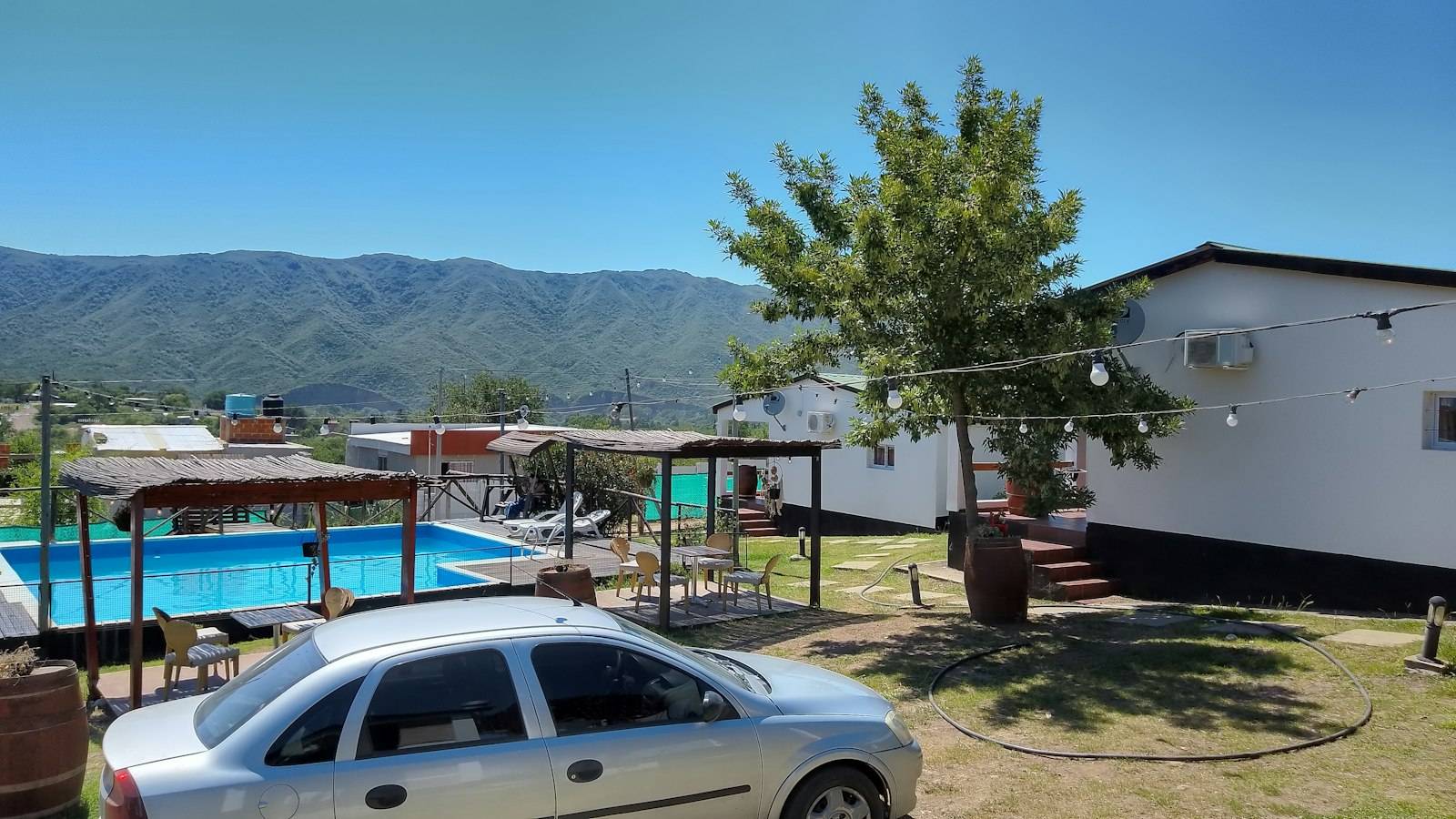
The important thing to understand about a campsite booking is that you are buying a pitch or a mobile home, not a room in a building. The price covers the pitch, the mobile home and its terrace, and the on-site facilities - pool, entertainment, sometimes a supermarket and restaurant. It does not cover the food, the ferry, the beach club, the water park sessions at some sites, or the linen, all of which are extras at the reception desk.
maeva Home and maeva super Home are the private-owner layer. These are properties - houses, flats, farmhouses - rented out by individuals rather than by a resort company, and the difference is the service wrapper. maeva super Home is the curated version: the platform states that its teams visit and check every property, and the range is tiered into Sélection (three stars), Prestige (four) and Exclusive (five), where the higher tiers are recently renovated or architecturally exceptional. Included in a super Home booking are an end-of-stay cleaning service, a maintenance kit, bed linen, bath towels, beds made up on arrival, a baby kit available to register online, a digital guidebook for the destination, and an on-site "Générateur de Sourires" - a local host who meets you, settles you in and stays reachable throughout the stay. For a family with small children, the made-up beds and the included linen are worth more than they sound.
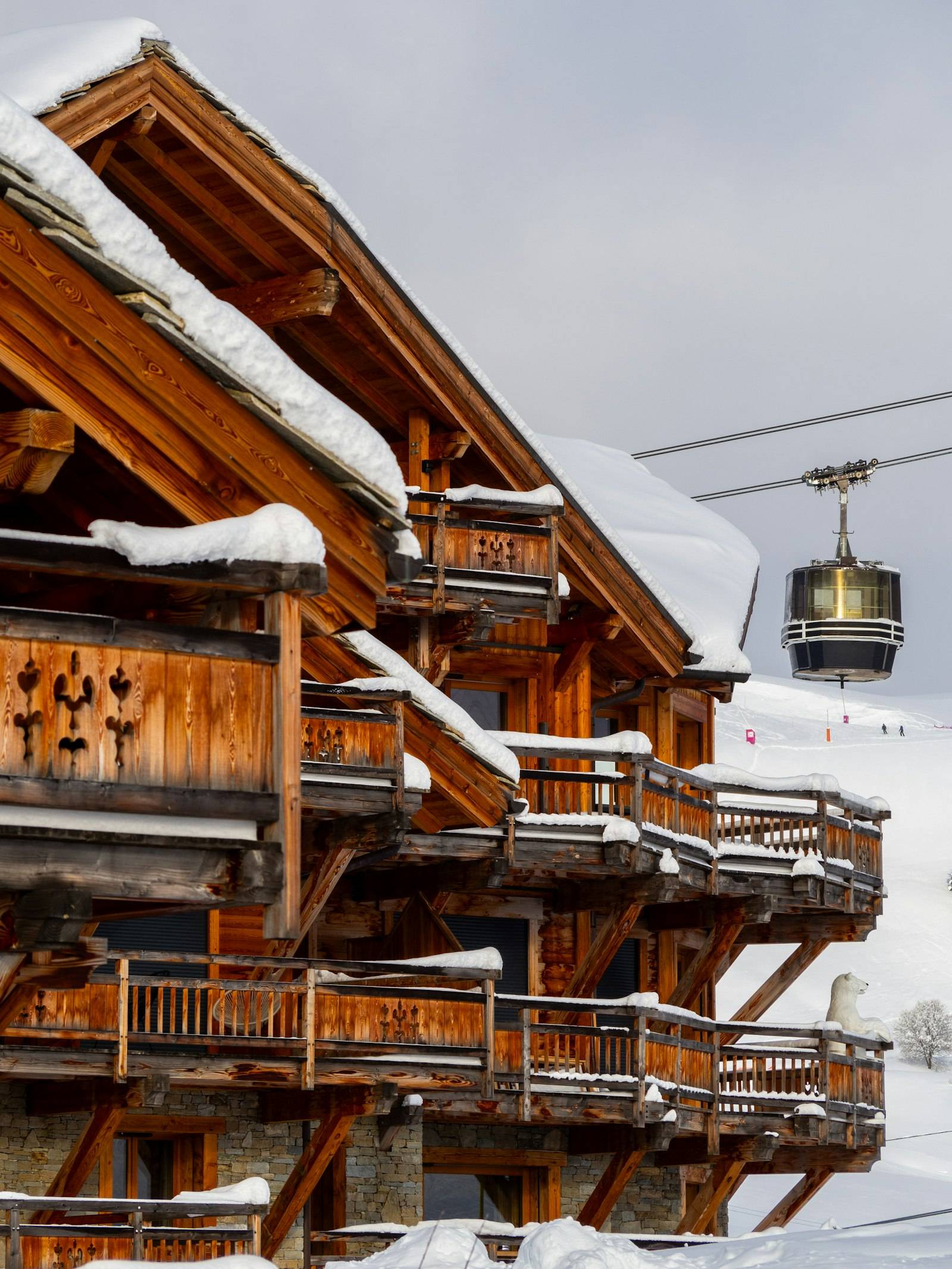
Chalets, houses and villas - including ski chalets in Avoriaz, Arc 1800, Alpe d'Huez, Méribel, Val Thorens, Les Ménuires, La Plagne, Valmorel, Flaine and Orcières 1850 - are the fourth category, and they mix professional management with private ownership, which is why they read differently from a residence. There is also a small On M' selection of properties curated by maeva's own experts.
A rough decision rule. You want to walk to a beach, a restaurant and a bakery with a kitchen to cook in: book a holiday residence. You want a pool, an entertainment programme and children with somewhere to go: book a campsite in the maeva Club or Escapades range. You want a house with a garden, a view and someone to call when the boiler fails: book maeva Home or super Home. You want your own front door in the mountains with a fire and no neighbours: book a chalet.
For scale, the Cap d'Agde page on the site lists 57 properties at the time of writing, and the catalogue runs across France - Provence, Brittany, Normandy, the Basque Country, the Riviera, the Alps, the Landes, Corsica - and across Europe into Italy, Austria, Switzerland, Spain, Croatia, Portugal, Belgium, Germany and the Netherlands.
How the Booking Actually Works
The mechanics are learnable in ten minutes and are worth learning, because the two things most likely to go wrong - a deposit you did not expect and a reception you cannot find - both come from skipping them.
You search with dates and travellers, filter by destination, price, accommodation type, rating and facilities, and book. To turn a quote into a firm reservation you pay a deposit of 30 per cent of the rental together with the service fees and, if you want it, the cancellation cover. The balance is due later, and your bon d'échange - the exchange voucher, or travel document - appears in your account around 30 days before departure once the stay is fully paid, or a few days after the balance lands if you pay late, and is emailed to you. You are told explicitly that the address of the property is not released before the balance is settled, which is sensible and worth knowing if you are trying to book a late-arrival check-in.
Arrivals are the quiet operational detail. Most properties take check-in between 17:00 and 19:00, because the accommodation has to be cleaned and reset between one week and the next. If you are arriving late, or on a day other than Saturday, the platform's own instruction is to call the property directly using the number printed on your voucher, and they will tell you how to collect the keys.
Here is the part that surprises people, and it is a genuine improvement on the classic French rental: at most campings and maeva Home properties there is a 100 per cent online pre-check-in. You do not go to a reception desk. You complete the formalities online, settle the tourist tax, and your keys are waiting inside the property. Checkout is contactless as well, with the keys simply left in place.
Two operational warnings. Modifications - different dates, different property, different type of accommodation - carry a flat fee from 40 euros, plus whatever the underlying property charges. And cancellations cannot be taken over the phone: they have to be filed through your account under "Mes séjours à venir". That is an irritating detail if you are used to ringing a hotel, but it is also how the site guarantees that a cancellation is actually recorded.
What It Actually Costs
The headline rate is not the cost of the holiday, and the gap between the two is where most unhappy reviews come from. Here is everything that can sit on top of it.
- The price itself is for the week, not the night. On the Cap d'Agde page, a sample week in late April was advertised at 266 euros for a four-star campsite, reduced from 408 euros, with another four-star campsite at 154 euros down from 162 euros and a third at 229 euros. Those are full-week figures. Read them as "the cost of the week" and the comparison against a hotel rate becomes obvious.
- Service fees run from 10 to 50 euros depending on the value of the stay, and are added to it. Paying by bank transfer, by post with ANCV holiday vouchers, or with gift cheques adds a further 18 euros on top. Card and PayPal carry no surcharge.
- The tourist tax is paid on arrival, not at booking, at between 0.20 and 2 euros per person per night, set by each commune. The age thresholds differ by country and are worth knowing before you count heads: in France it applies to adults only (children under 18 are exempt); in Spain from age 16; in Belgium and the Netherlands to everyone; in Germany to adults with children under six exempt; in Italy from age 10; in Portugal from age 13; and in Croatia to adults, with 12-to-18s charged at half rate and under-tens exempt.
- The security deposit is separate and is paid at the property on arrival. The amount is stated on your voucher. It is refunded to your card by your bank, which takes about 15 days - longer than most people expect, and worth factoring into your own cash flow.
- Water and electricity may be extra, billed either from a meter reading or as a flat rate, and the voucher tells you which. Nothing is assumed to be included.
- Bed linen is not always included. On properties where it is an option you can bring your own or pay a supplement. In the maeva super Home range, by contrast, bed linen, bath towels, a made-up bed and the end-of-stay cleaning are included in the rate.
- Extras are extras. Ski equipment hire, children's clubs, meal packs, cleaning on departure, cots, televisions and baby equipment are all chargeable, and several of them have to be requested from the residence rather than bought through the platform.
- Pets are allowed but charged for. The site lists more than 15,000 pet-friendly properties; only dogs and cats are permitted, one animal per property, with an up-to-date vaccination certificate required at arrival and a cleaning surcharge usually applied. The animals must not be left alone in the property.
Payment is unusually flexible for a French travel site, and this is one of the better arguments for booking through the platform rather than by phone. You can pay in three instalments with no fee and no minimum, provided you book more than 90 days before departure and the rate is not a non-refundable one; the three payments cannot be combined with ANCV holiday vouchers. There is also four-instalment payment by card through the group's finance partner FLOA BANK, which is the easiest way to spread a summer week over a winter. ANCV Connect - the modern version of French holiday vouchers, which most French employees now receive as a digital balance - can cover the entire stay with no extra charge, and can be combined with a card for the remainder. PayPal, by contrast, has to be paid in full at once.
If your employer has a comité d'entreprise - a French staff committee - this is the cheapest route of all. maeva runs a dedicated CSE programme with its own partner line, and negotiated CSE rates are routinely better than public pricing. The same applies to travel agencies, which have their own partner programme.
The Guarantees: The Part Nobody Else Does
Three commitments on this site are unusual enough that they are worth checking before you book anything else, because they change how much risk you are carrying.
The best price guarantee is straightforward: if you find the same stay cheaper elsewhere within 48 hours of booking, you send a screenshot of the cheaper offer plus your name and booking number, and if the claim is validated you get the difference refunded. Forty-eight hours is a narrow window but it is enough to check one obvious aggregator before you commit.
The "satisfied or refunded" guarantee is the more interesting one, and it is closer to the European consumer-law position than anything else in this catalogue. You activate it from your account - and to do so you must have actually arrived at the property and handed back the keys on the same day, before the reception closed. You have until two days after the original start date to activate it. No justification is required; maeva verifies with the property afterwards. The refund is 100 per cent of the accommodation, returned to your original payment method within seven working days. What is excluded is explicit: insurance, service fees, the tourist tax, and any extras such as cleaning, bed linen, towels or ski equipment. It applies to every property on the site, it is not retroactive, and it does not cover stays booked before 20 October 2025.
The loyalty wallet - the "cagnotte fidélité" - works like a rebate rather than points. Every booking puts 10 per cent of the accommodation price back as credit, up to a maximum of 300 euros. The credit only becomes available once your stay has ended, and it can be applied to a new booking whose accommodation price is at least three times the credit - a 100 euro credit needs a 300 euro stay - with the new holiday beginning before 30 September 2027. If you cancel that second booking, the credit goes with it. For a family who books the same kind of holiday every summer, this is a 10 per cent return on the second year and a meaningful one on the third.
Cancellation is sold as two optional products, and the difference between them is large. Flexi lets you cancel free of charge up to 30 days before arrival, excluding service fees and any insurance you took out; it is only offered when the stay begins at least 30 days after you book. Flexi+ lets you cancel until 17:00 the day before arrival: 80 per cent of the accommodation and service fees is refunded to your payment method within 48 working hours, and the remaining 20 per cent is credited to your loyalty wallet for a year. No justification is needed under Flexi+ either. Neither option covers extras or insurance.
One more detail worth knowing about ski bookings specifically: a refund for a week with no snow depends entirely on the insurance you purchased, not on the operator. Flexi+ lets you cancel without justification, but the "no snow" question is an insurance question, so read the policy before you assume the operator carries the risk.
Who It Is For - and Who It Is Not
It suits you if you are travelling with children and want a kitchen, a washing machine and space to spread out rather than a hotel room with a balcony; if you are staying a week or longer, because the pricing model assumes seven nights and short breaks cost disproportionately more; if you want France in September, or a mountain village outside February, because half of maeva's 2025 bookings were low-season and that is where the supply and the discounts are; if you are a French employee with ANCV Connect or a company committee, because those are the routes to the best price; if you want a property with a pool and an entertainment programme without signing up for a holiday club; or if you want a single portal that holds residences, campsites, chalets and private houses, and you would rather compare them side by side than across four websites.
It does not suit you if you want a hotel with a concierge, daily housekeeping and a restaurant on site; if you are booking for two nights, because the arrival window, the minimum-stay rules and the flat-rate pricing all assume a week; if you want a swimming pool guaranteed to be open on your arrival date in June, because campsite pools are seasonal and the details live on the property page rather than in the headline; if you want one booking, one invoice and one phone number for everything, since the campsite, the residence and the ski hire are separate contracts with separate reception desks; or if you refuse to read French terms - although the site does serve an English version of the same catalogue, which is one of the most useful things about it.
It is also worth being honest about the shape of the offer. This is a booking platform, not an operator of individually remarkable properties. The quality ceiling in the maeva Home and super Home ranges is genuinely high; the base of the catalogue is standard French self-catering accommodation, competently run and reliably clean. If what you want is a particular view, a particular pool or a particular village, the platform will get you to the right place - but it is the aggregation and the guarantees, not the properties themselves, that are the reason to book here.
What Could Be Better
Where it works: the guarantees are the differentiator and they are real, not decorative - a 48-hour price-match window, a same-day "satisfied or refunded" that requires you to turn up and hand the keys back, a no-questions cancellation until the day before arrival, and a 10 per cent loyalty rebate all sit on the same site, which is very unusual. The scale is another genuine strength: professional in-house operations, a tour operator licence, a French customer service team on the phone six days a week, and enough inventory that a September week in a small Breton village is a realistic booking rather than a maybe. And the fact that half the bookings are low season tells you the pricing model is not built around the July fortnight.
Where it falls short: the site is French-first, and even the English version is a translation of a French commerce rather than a native one - the categories, the legal ranges and the fine print still read oddly, and a good deal of the useful detail lives on individual property pages in the local language. The fee structure is layered in a way that costs you real money if you do not read it: service fees on top of the rate, a tourist tax on arrival, a deposit held against your card for fifteen days after checkout, optional linen, and extras that include everything you might want from the ski school to the baby cot. Arrival is tightly windowed at 17:00 to 19:00, and the number of separate parties you may have to deal with - platform, property, campsite reception, ski hire - is higher than in a package holiday. The "satisfied or refunded" guarantee excludes service fees, the tourist tax and every extra, so a bad experience with the linen charge will not be refunded under it. And the marketing language occasionally outruns the product: the campsite ranges are described in terms of atmosphere and natural setting, but the classifications that decide what you actually get - the number of stars, the water park, the entertainment programme - are property-level details you have to check individually, and the mobile homes on a pitch are not interchangeable with a holiday residence in a town.
Conclusion
Self-catering is the French holiday, and the reason foreign visitors keep defaulting to hotels is not a shortage of good accommodation - it is that the accommodation is distributed across categories with different rules and a French-language booking flow. maeva.com is the clearest answer to that problem that currently exists: one operator with an in-house travel agency licence, four product lines you can compare in the same search, an English version of the catalogue, and a set of commercial guarantees that make a €600 family week a low-risk commitment rather than a leap of faith.
Use it this way. Decide which of the four products you actually want before you search - residence, campsite, maeva Home, or chalet - because the right property in the wrong category will not solve your problem. Take the Flexi+ cover if the trip is booked months ahead and the dates are uncertain, because it costs little and removes nearly all of the risk. Check the arrival window and the tourist tax before you commit, and add the 48-hour price-match check to your routine. And if you work for a French employer, use your staff committee's partner line rather than booking as a private guest.
Ready to look at the residences, campsites and chalets for your dates?
Browse self-catering holidays in France and Europe on maeva.com →
Image credits: Alen Rojnić, Sergio Atilio Duran, Xavier Foucrier and Rayyân via Unsplash.