
There is a moment on every long-haul flight when you take off your shoes and realise your ankles have become someone else's. Sitting for eight, ten or fourteen hours slows the circulation in your legs, and the result is the familiar travel bloating that makes the arrival photo look slightly different from the departure one. Frequent flyers have known about compression socks for years; what has changed is that compression gear has become genuinely wearable, and no longer looks like a medical stocking.
One of the brands driving that shift is Compressport, a French company that started on the starting line of an Ironman and now sells compression sleeves, socks, trail clothing and race accessories in more than a hundred countries. This is not a medical recommendation, and compression is not a substitute for getting up and walking around the cabin. But if you travel often, run or hike at your destination, or simply want your legs to feel less punished on arrival, it is worth understanding what the brand makes and which pieces are actually useful in a suitcase.
What Compressport Actually Is
Compressport was founded in 2008, and its first product was launched at the Ironman in Nice: the R2, a calf sleeve designed to support the muscles during endurance effort. That origin matters, because it explains the brand's entire design language. This is not a fashion company that added compression to a look. It is a race-focused business that built its reputation on a piece of fabric worn by triathletes who needed to run a marathon after a 180-kilometre bike ride.
The timeline since then is a useful summary of what the company cares about. In 2010 its sleeves were the number one choice at the Ironman World Championship in Kona. In 2011 it launched the Pro Racing Socks and began designing its own technologies in-house. The trail range arrived in 2013, the first seamless base layers in 2014, and by 2015 eight Tour de France teams were wearing the brand. In 2016 it became an official supplier to the Ironman Europe series, and Ludovic Pommeret won the UTMB that same year. The Pro Racing Socks V4.0 followed in 2022, the R2 Aero sleeves were developed with Sam Laidlow in 2023, and the Thunderstorm 25/75 waterproof jacket arrived in 2024.
What ties all of that together is a research approach the brand calls The Lab, led by Arnaud Ménétrier and staffed with biomechanics and physiology specialists. The company says it has designed its own technologies since 2011 and tests products with a network of around 35 field testers. You do not have to take every marketing claim at face value to recognise that a brand which has spent fifteen years making gear for endurance athletes probably knows something about how fabric behaves against a moving leg.
Why Compression Makes Sense for Travel
Compression garments apply graduated pressure to the leg, firmest at the ankle and lighter higher up. The idea is to help the veins return blood toward the heart, which is exactly the function that suffers when you sit still for hours. Many travellers report less swelling, less heaviness and less of the dull ache that comes after a long flight. The evidence is strongest for people with circulation issues and for recovery after exercise; for healthy travellers the benefit is more modest, but the comfort difference is real enough that plenty of frequent flyers treat a pair of compression socks as part of their standard kit.
There is an important caveat. Compression socks are not a treatment for deep vein thrombosis, and anyone with a diagnosed circulation condition, a history of blood clots, or a medical reason to be careful should speak to a doctor before using them. The other caveat is that compression does not cancel out immobility. The best routine on a long flight is still to wear the socks, drink water, avoid alcohol, and walk the aisle every couple of hours.
Where compression gear earns its place beyond the flight is at the destination. If you are travelling to run a half marathon, hike a section of the coast path or spend a week walking a city, a pair of compression sleeves or socks is a small, light addition that can make the difference between a good trip and a trip spent nursing sore calves.
The Pieces Worth Packing
Compressport's catalogue is broad, and not all of it belongs in a travel bag. These are the categories that make the most sense for a traveller who is not racing professionally.
The R2 calf sleeve. This is the product the brand was built on, now in its third generation. It is the most versatile piece in the range for travel: light, easy to pack, and useful both on a flight and during a run or hike. If you only try one Compressport product, this is the one to start with. It slips over the calf, leaves the foot free, and can be worn under trousers without looking unusual.
The Pro Racing Socks V4.0. The current generation of the brand's flagship running sock, launched in 2022. It is designed for racing and long efforts, with targeted support around the arch and ankle and a mesh structure for ventilation. For travel, the appeal is that it doubles as a compression sock on the plane and a running sock at the destination, which means one less item in the bag. The V4.0 comes in high and low versions; the high version offers more calf coverage and is the better choice for a flight.
The Pro Marathon Socks V2.0. Launched in 2020 and built around cushioning and blister prevention over long distances. If your travel involves a lot of walking rather than running, this is a more comfortable everyday option than a pure race sock. The extra padding is noticeable underfoot without making the shoe feel tight.
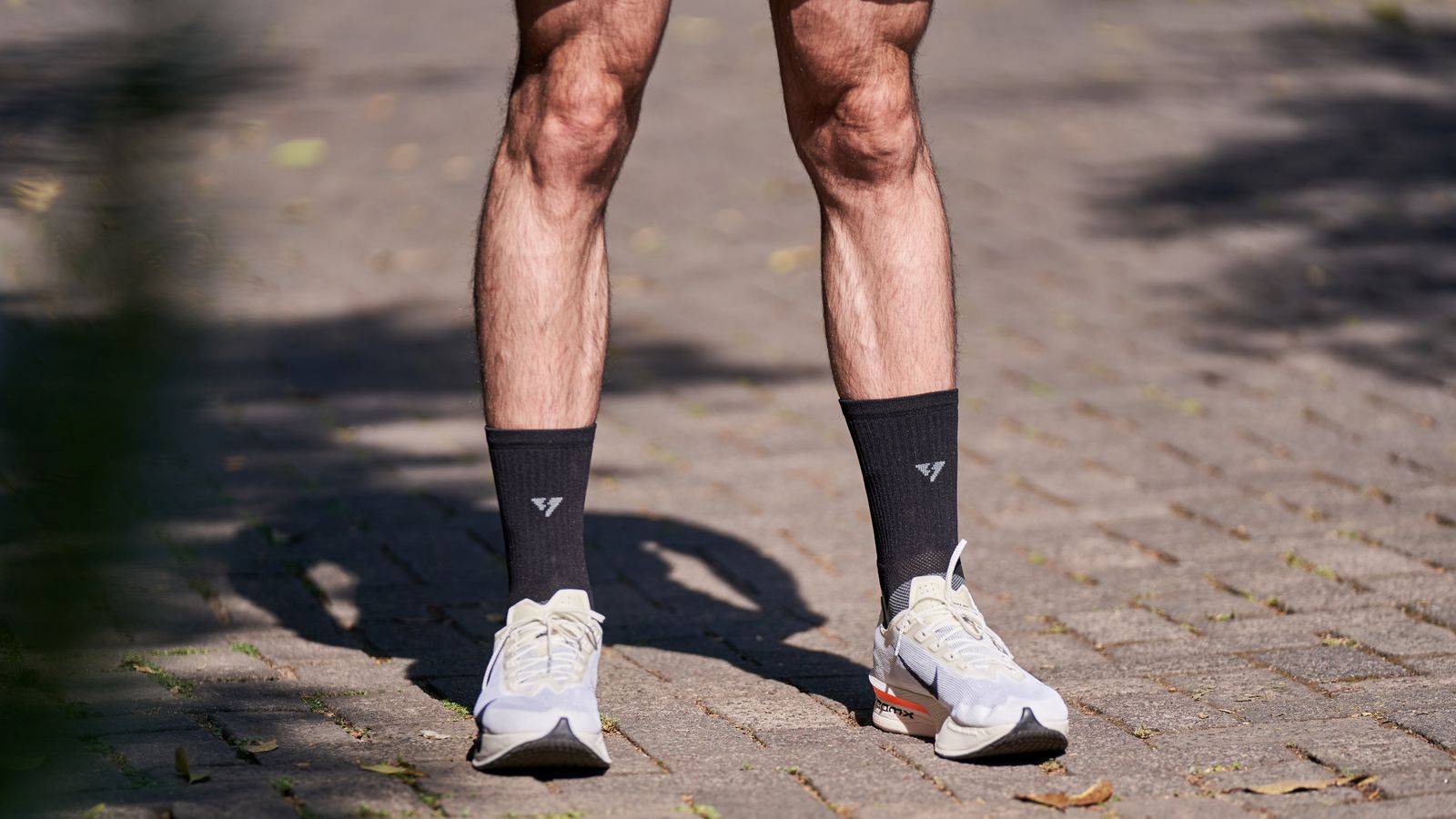
Photo: Willians Huerta / Pexels
The recovery range. Compression is as useful after effort as during it, and the brand's recovery pieces are designed for the hours after a race or a long hike. If you are travelling to an event, a pair of recovery socks or sleeves is a sensible addition to the suitcase; they are also useful after a long flight, when your legs have been still for too long.
The Free Belt Pro 2.0 and Ultrun Pack. These are trail-running accessories rather than travel essentials, but they are worth knowing about if your trip involves hiking or ultra-distance running. The Free Belt is a running belt that can carry poles, and the Ultrun Pack is a hydration pack. Neither is something you would pack for a city break, but both are well regarded in the trail community.
The Thunderstorm 25/75 jacket. Launched in 2024 as a waterproof and breathable shell. If you are travelling somewhere with unreliable weather and want one jacket that can handle a run and a walk, this is the piece the brand positions as its technical benchmark.
The R2, the Pro Racing Socks and the recovery pieces are the core of the travel-friendly range. The full Compressport catalogue also includes triathlon suits, trail clothing, waterproof shells and running accessories, if you want to look beyond the compression basics.
How to Get the Size Right
Compression gear only works if it fits properly, and the sizing logic is different from ordinary clothing. For calf sleeves, measure the widest part of your calf, not your shoe size. For compression socks, you usually need both your shoe size and your calf circumference, because the sock has to fit the foot and the leg. The brand publishes a size chart for each product, and it is worth spending two minutes with a tape measure before ordering.
The fit should feel firm and supportive, not painful. If the fabric pinches behind the knee, bunches at the ankle, or leaves deep marks after an hour, the size is wrong. If it slides down during a run, it is too loose. A good test is to wear the piece for twenty minutes before you travel; if it is uncomfortable in the shop or the living room, it will be worse at 35,000 feet.
Using Compression on a Flight
Put the socks or sleeves on before you board, while you still have space to sit down and pull them on properly. Wearing them for the whole flight is more effective than putting them on halfway through. Take them off once you are through arrivals and have walked around for a while; there is no need to wear them for the rest of the day unless you find them comfortable.
Pair them with the basics: drink more water than you think you need, skip the second glass of wine, and get up every two hours if you can. Compression is a support, not a substitute for movement. If you are on a night flight and want to sleep, the socks are comfortable enough to keep on, and they will not interfere with the rest of your travel clothes.

Photo: Magic K / Pexels
Packing and Care
Compression garments are made from technical fabrics that do not like fabric softener, hot water or a tumble dryer. Wash them cold, ideally in a mesh bag, and let them air dry. They dry quickly, which is one of the reasons they work well for travel: a pair washed in the evening is usually ready by morning. Take two pairs if you are travelling for more than a few days, so you always have one clean and one in use.
Pack them flat or rolled rather than folded sharply. A hard crease in a compression sleeve can create a pressure point, and the fabric will last longer if it is not compressed into a corner of the bag for days. They take up very little space, which is the whole point.
Price, Shipping and the Fine Print
Compressport is a French brand, and its main site is in French with a country selector that changes currency and delivery options. The sizing and product information are translated inconsistently across markets, so it is worth checking the French page for the full technical detail even if you order from another country. Prices are in euros on the French site, and the brand runs private sales with discounts of up to 40 percent, which are worth checking before paying full price.
For orders within France, the site advertises free delivery from €60, free returns within 30 days and delivery in two to four working days. International delivery and returns depend on the destination selected at checkout, so those terms should be confirmed before ordering. The return window is generous by industry standards, which matters with compression gear because fit is the one thing you cannot judge from a photograph.
Who It Is For — and Who It Is Not
This gear makes the most sense for travellers who already run, hike or cycle, and for frequent flyers who have noticed that long flights leave their legs feeling heavy. It is also a good fit for anyone travelling to an event, a trail holiday or a walking trip, where a small piece of kit can make the difference between enjoying the days and recovering from them.
It is less compelling for the traveller who wants a single pair of socks for a weekend city break and has never had a problem with swelling. Compression is not magic, and a €20 pair of ordinary socks will do the job on a two-hour flight. It is also not a substitute for medical advice, and anyone with a circulation condition should treat it as a conversation with a doctor rather than a shopping decision.
What Could Be Better
The biggest friction is the website. The French-first structure, the country selector and the inconsistent translation make it harder to compare products than it should be, especially for a brand with such a technical catalogue. The size charts are there, but they are not always easy to find, and the difference between the R2, the R2 Aero and the various sock generations is not obvious to a first-time buyer.
The second issue is price. Compressport sits at the premium end of the compression market, and the technical justification is real, but a casual traveller may struggle to justify the cost against a basic pair of compression socks. The private sales help, and the products are durable enough that the cost per trip falls over time, but this is not the cheapest way to solve swollen ankles.
Finally, the brand's marketing occasionally leans harder on performance language than the evidence supports. Compression can help with comfort and recovery, but it will not turn a holiday hiker into a trail runner. Buy it for what it is: well-made gear that makes long travel and long efforts more comfortable.
The Verdict
Compressport is one of the few compression brands with a genuine athletic pedigree, and the R2 sleeve and Pro Racing Socks are the pieces that best translate from race kit to travel bag. If you fly long-haul regularly, or if your holidays involve running or hiking, a pair of calf sleeves and a pair of high-cut socks is a sensible, light addition to your packing list. Start there, wear them on your next flight, and see whether your legs notice the difference.
Explore the Compressport range
Image credits: RUN 4 FFWPU, Willians Huerta and Magic K via Pexels.